Where is the VIN number on my car?
Your car’s VIN is usually in at least three places. There’s a small plate you can see through the bottom of the windscreen, a sticker inside the driver’s door frame, and the number printed on your V5C logbook. It’s also stamped into the bodywork, often under the bonnet or under a flap in the carpet. If you only need it for an insurance quote or a parts order, start with your V5C.
Here’s where to look, how to read it and why it’s worth knowing.
What a VIN actually is
VIN stands for Vehicle Identification Number. (Yes, “VIN number” says number twice. Everyone says it anyway.) It’s a 17-character code of letters and numbers. The car gets it at the factory and no other car has the same one.
Number plates change. Colours change. The VIN stays with the car for life. That’s why insurers, garages, parts counters and the DVLA all use it to identify a vehicle.
Two quick tips for reading one:
- It’s always 17 characters. If you’ve counted 16 or 18, start again.
- It never contains I, O or Q, so they can’t be mistaken for 1 and 0. If you think you see an O, it’s a zero.
Where to find the VIN on the car itself
The exact spots vary by manufacturer, but work through these in order:
- Bottom of the windscreen. Stand outside and look at the corner where the glass meets the dashboard. Many cars have a small metal plate visible here. It’s easier to read in daylight.
- Driver’s door pillar. Open the door and check the frame where it latches. There’s often a sticker with the VIN, tyre pressures and paint code.
- Under the bonnet. Check the bulkhead between the engine and the cabin, the front slam panel, or the tops of the suspension turrets. It may be on a riveted plate or stamped into the metal.
- Under the carpet. On many cars the VIN is stamped into the floor beside the front passenger seat, under a small cut-out flap.
- In the boot. Some models put it on the boot floor, near the spare wheel well.
Still stuck? The handbook will tell you where your manufacturer puts it.
Finding your VIN on paper
You don’t need to go near the car to find the VIN. It’s printed on:
- Your V5C logbook, in the vehicle details section, labelled “VIN/Chassis/Frame No.”
- Your insurance schedule, in most cases.
- Service invoices from main dealers and many independent garages.
- Purchase or finance paperwork from when you bought the car.
Paper is only as accurate as whoever typed it. That matters most when you’re buying.
If you’re viewing a used car, the VIN on the V5C must match the VIN on the car itself: windscreen plate, door sticker and stamped number. One match isn’t enough.
What a VIN tells you about a car
The 17 characters aren’t random:
- Characters 1–3 identify the manufacturer and the country where the car was built.
- Characters 4–9 describe the model, body style and engine.
- Characters 10–17 are the car’s own serial. On many makes, the 10th shows the model year and the 11th the factory.
For an owner, that does three useful jobs:
- The right parts first time. Give the VIN to a parts counter and they can match your car’s exact spec. No guessing which of three brake disc sizes it takes.
- Spotting a clone. A cloned car wears another car’s plates, but the stamped VIN doesn’t lie. If the numbers on the car and the V5C don’t all agree, walk away.
- Tracing its history. Service records, recalls and the manufacturer’s own records are all filed against the VIN, not the number plate.
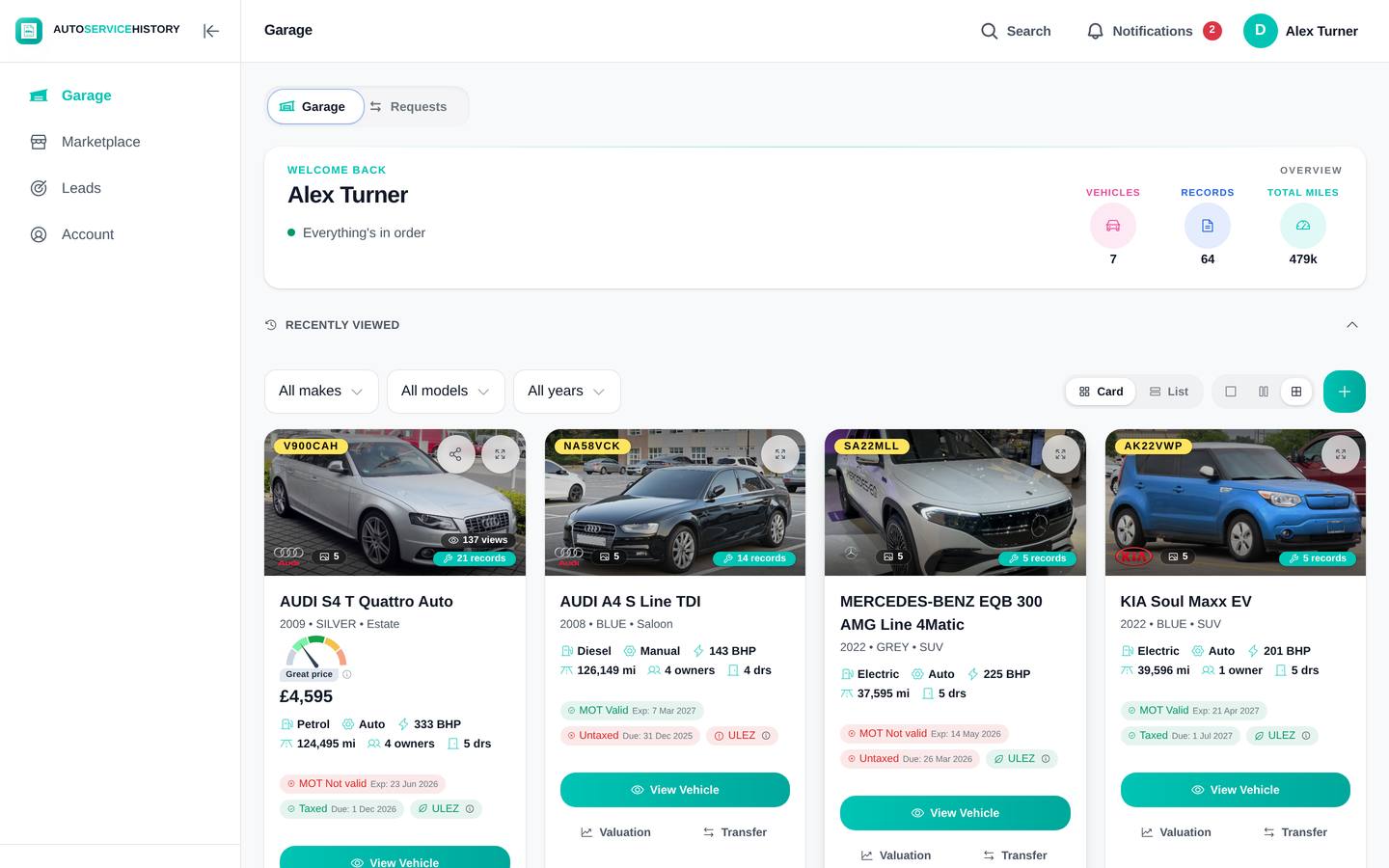
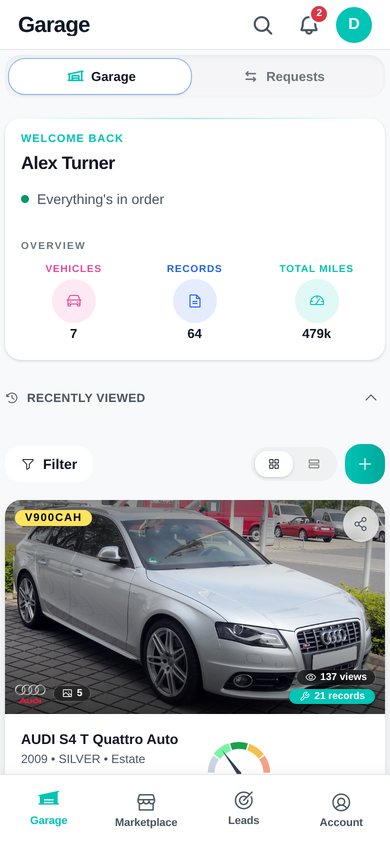
That last point is where AutoServiceHistory helps. Take a photo of the VIN and you get the vehicle record back, with the DVLA and MOT data already filled in (see how it works). Each VIN gets one record, so the same car can’t end up with two different histories. If the service book has gone missing, we can request the manufacturer’s records, and they come back within hours. There’s more on what that means for keeping and selling a car on our page for owners.
Keep the VIN and the history together
Knowing where the VIN is helps once. Keeping it next to the car’s full history helps every time you need a quote, a part or a buyer.
On AutoServiceHistory, everything is filed against the VIN. Photograph your receipts and the AI reads them, pulling out the work done, the cost and the mileage. DVLA and MOT data comes in automatically, so there’s nothing to type. The full list is on our features page.
It pays off when you sell. You can share a verified report by link or QR code, and a buyer opens it with no app and no account. They can check the VIN on the report against the windscreen plate and the V5C, which is the check they should be doing anyway. You also get a free A4 “For Sale” sheet. There’s more on selling on our owners page.
The free plan has no time limit and needs no card (see pricing). If that sounds useful, set up your car’s record for free.
The honest short version
- A VIN is a 17-character code unique to your car. It never uses I, O or Q.
- On the car, look at the bottom of the windscreen, the driver’s door pillar, under the bonnet, under a carpet flap or in the boot.
- On paper, check your V5C, insurance schedule, service invoices and purchase paperwork.
- If you’re buying, the VIN on the V5C must match every VIN on the car.
- Parts, recalls and service records are tied to the VIN, not the number plate.
FAQ
Where is the VIN on my V5C logbook? It’s in the vehicle details section, labelled “VIN/Chassis/Frame No.” On a modern car it’s 17 characters long. It should match the windscreen plate and the door pillar sticker.
Can I find my VIN from my number plate? Not with the free GOV.UK vehicle checks, because they don’t show the full VIN. Use your V5C, your insurance schedule, a service invoice or the car itself.
Is a VIN the same as a chassis number? On any modern car, yes. Older classics may have a shorter chassis number in the manufacturer’s own format.
Is it safe to give out my VIN? Generally, yes. Anyone can read it through your windscreen, and insurers, garages and genuine buyers will ask for it. Keep the V5C’s document reference number private, though, because it’s used for online DVLA services.
What if the VINs don’t match? If you’re buying, walk away, because a mismatch can point to a cloned or stolen car. If it’s your own car and the V5C has a typo, contact the DVLA to get it corrected.