Does service history add value to a car?

Yes. Same car, same mileage, same colour: the one with a full, provable service history sells for more, and sells faster. On a cheap runabout the gap is usually a few hundred pounds; on a newer or premium car it can run into four figures. More to the point, a documented history takes away the thing buyers haggle hardest over — doubt. Here’s what it’s actually worth, and how to make yours count.
How much is a full service history worth?
Nobody can give you an exact figure. Any valuation is a market estimate, and the number moves with the model, the age, the mileage and the buyer standing in front of you. But the direction is consistent, and you can see it in how the trade works: valuation tools and part-exchange forms ask whether the history is full, partial or none, because the answer changes the number they hand back.
A rough way to think about it:
- Older, cheaper cars (under about £4,000). The cash gap is smaller, but history often decides whether it sells at all rather than sits for six weeks.
- Mainstream cars, three to eight years old. This is where it bites hardest in pounds — buyers have plenty of alternatives and will pick the one that can prove itself.
- Premium, performance or high-mileage cars. Biggest gap by far. Servicing is expensive, so an unknown history gets discounted hard.
Full, partial or none — what those words mean to a buyer
The phrase “full service history” gets used very loosely in adverts. Buyers have learnt that, so they check.

- Full. Every service done at roughly the right time and mileage, with proof for each one.
- Partial. Some record, some gaps. Common, and not fatal — but priced as a risk.
- None. No proof at all. The buyer assumes the worst, knocks money off, or walks.
Three stamps and a five-year hole is partial history, whatever the advert says. Be straight about it; getting caught overstating it costs you more than the gap ever would.
Buyers aren’t paying for paperwork — they’re pricing risk
The receipts themselves are worth nothing. What a buyer is really buying is a lower chance of a large bill in the first six months. So the questions are always the same: is the cambelt done, when was the oil last changed, has anything expensive been ignored?
With no proof, they assume the worst on every one of those and deduct accordingly. A cambelt and water pump alone is comfortably a few hundred pounds on most cars. Two or three unknowns and you’re a grand down before anyone’s mentioned the tyres.
What actually counts as proof
- Dated invoices with the mileage on them — a garage name, an address and the work itemised. A folder, a shoebox or a digital record all work; legibility matters more than format.
- The free MOT history from GOV.UK — cross-check that the mileages line up with your invoices. Buyers do this, so do it first.
- Main dealer or independent — both are fine. Named garage beats “a mate did it” every time.
- The big-ticket jobs called out separately — cambelt, clutch, gearbox or DPF work, each with a date and a mileage.
- The missing years chased up — if servicing was done at a franchised dealer, the manufacturer’s records can usually be recovered for you, and they come back within hours rather than weeks.
Making yours easy for a buyer to check
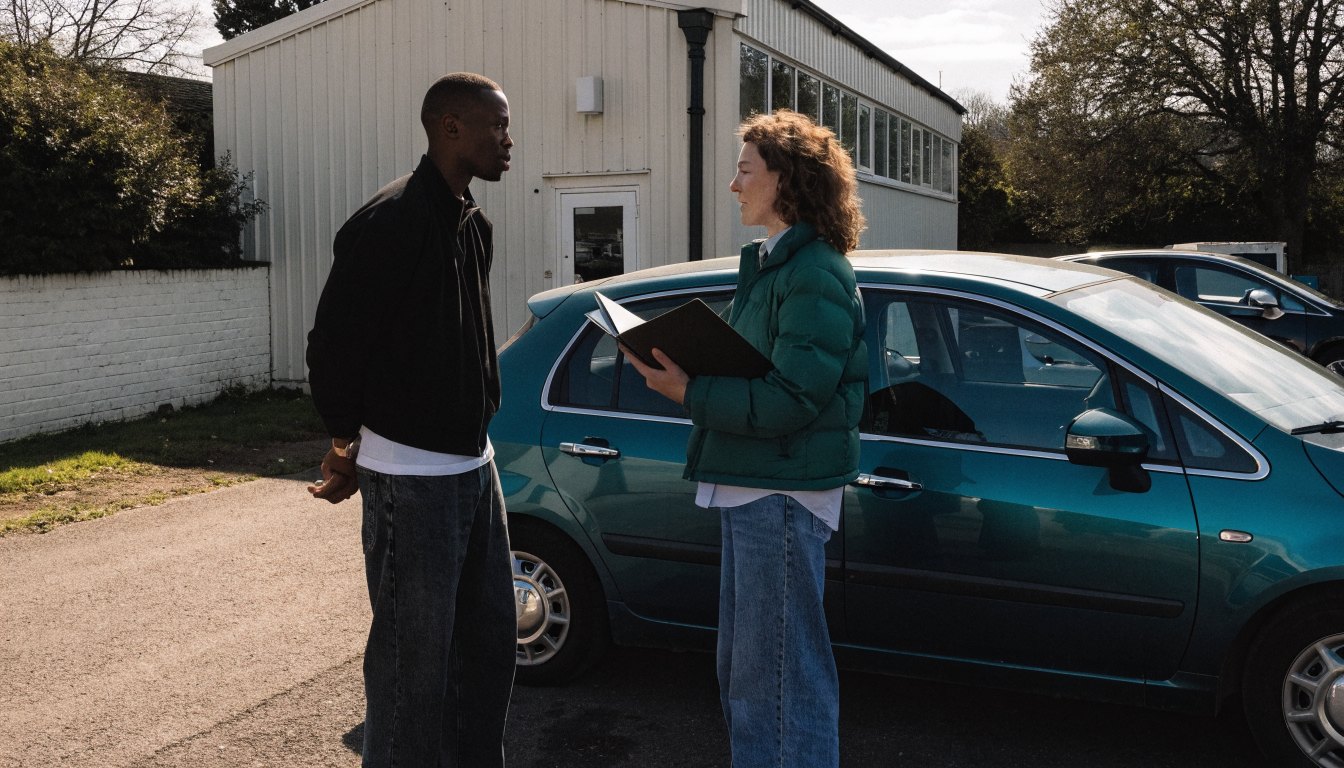
A shoebox works, but only if the buyer bothers to read it. Most won’t. They’ll skim, find a gap, and knock money off.
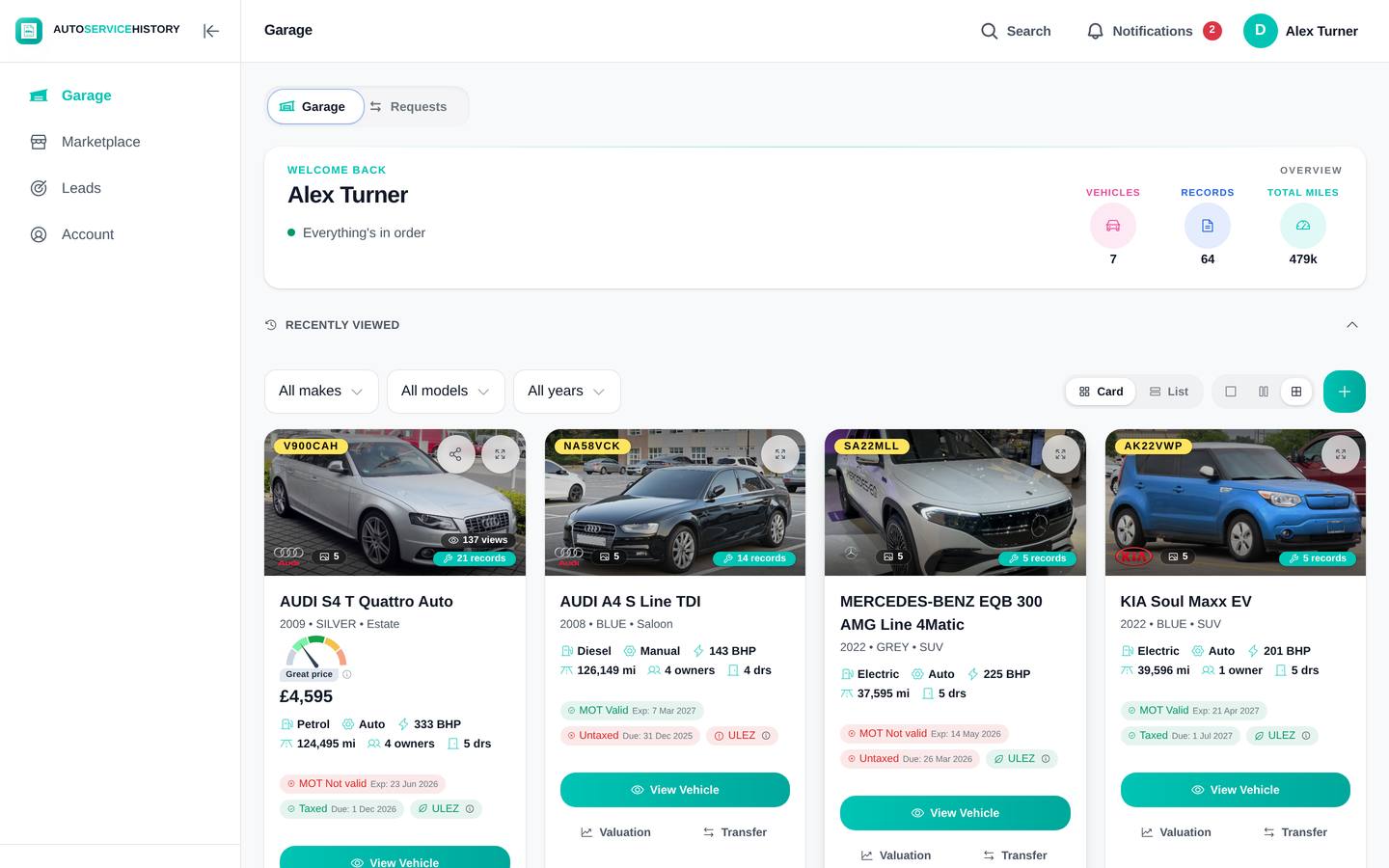
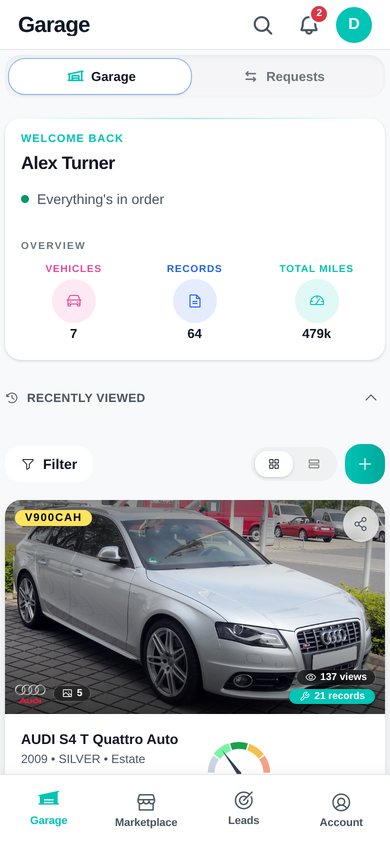
That’s the job AutoServiceHistory does. Photograph your receipts and the AI reads them into a year-by-year timeline of work, costs and mileages. DVLA and MOT data is pulled in automatically, so the mileage cross-check is already done. If franchised-dealer years are missing, the manufacturer’s records can be requested and come back within hours.
What you end up with is one report you share as a link or a QR code. The buyer opens it on their phone — no app, no account — and can ask the car’s own AI when the cambelt was done. There’s a free A4 “For Sale” sheet with that QR on it for the side window as well. The free plan covers what most private owners need.
Build your car’s record free and take a provable history to the sale.
The honest short version
- Yes, it adds value. Hundreds on a cheap runabout; four figures is realistic on a premium or high-mileage car.
- No exact number exists. Any valuation is a market estimate — the direction is reliable, the figure isn’t.
- Buyers are pricing risk, not paperwork. Unknowns get deducted for.
- Proof is dated invoices with mileages, cross-checked against the free GOV.UK MOT history.
- Chase the gaps before you advertise, not while a buyer stands on your drive.
FAQ
Does service history add value to a car? Yes. The same car with a full, documented history sells for more and sells faster — usually a few hundred pounds on an older car, often four figures on a premium or high-mileage one.
How much is a full service history worth? There’s no fixed figure, and any valuation is a market estimate. The gap is widest on premium, performance and high-mileage cars, where servicing is expensive and an unknown history gets discounted hard.
Can I sell a car with no service history? Yes, but price it lower and expect a longer wait. Be upfront, gather what proof exists — old MOT certificates, receipts, garage emails — and check whether missing dealer servicing can be recovered first.
Is a digital record as good as a stamped service book? It is. What matters is that each service has a date, a mileage and a named garage behind it. A record the buyer can check independently is worth more than a stamp they have to trust.
Is main dealer history worth more than an independent garage? Sometimes, on newer or premium cars where buyers expect it. For most cars a reputable independent with itemised, dated invoices is fine — a named garage with paperwork beats a stamp you can’t back up.