Full, partial or no service history — what's the difference?
Full service history means the car was serviced at every interval the manufacturer asked for, with a record to prove each one. Partial means some services are documented and some aren’t — a book with gaps, or receipts covering three of the last six years. No service history means there’s nothing to show at all, and a buyer has to take your word for it. The difference is money: on an ordinary used car it can run into hundreds of pounds, and considerably more on a premium model.
Here’s what each one means in practice, and how to work out which one you’ve actually got.
What “full service history” really means
Full means complete — not “mostly”. Every service the manufacturer’s schedule calls for, done at roughly the right mileage or age, with something to evidence it: a stamped book, an invoice, or a digital record showing the date, the mileage and the work done.
It does not have to be main dealer. A good independent garage with proper invoices counts, and on an older car it’s often the sensible choice. What matters is that the record is unbroken and the mileages line up.
Sellers use “FSH” loosely in adverts. If you can’t produce a record for every service, it isn’t full — and a buyer who checks will find the gap.
Partial service history — the story with holes in it
Partial is the most common of the three, and it’s rarely anyone’s fault. Cars change hands and the book doesn’t follow. A garage shuts and takes its records with it. Receipts go in a drawer, then a shoebox, then the bin.
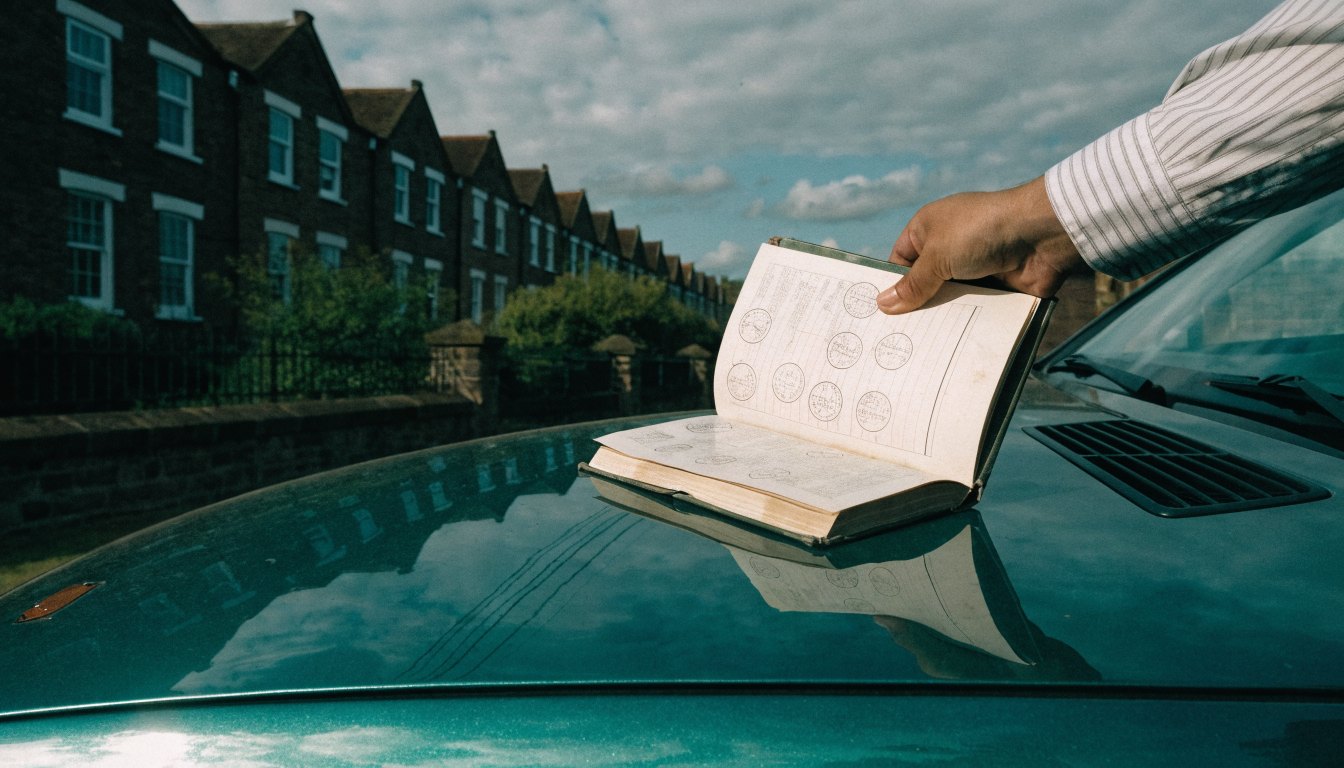
Not all gaps are equal. Two missing interim services on a well-used runaround is noise. A gap that swallows the cambelt interval is a different matter — that’s the job buyers ask about first, and “I’m sure it was done” is worth nothing.
Be straight about it in the advert. Say which years you can prove and which you can’t. Buyers forgive gaps far more readily than they forgive being misled.
No service history — what it costs, and what it doesn’t prove
A car with no history is priced for the worst case, because the buyer is carrying all the risk. Expect a hard discount, slower interest, and questions you can’t answer. Some warranties and goodwill claims also lean on evidence of scheduled servicing.
What it doesn’t prove is neglect. Plenty of “no history” cars were looked after perfectly well — the paperwork failed, not the maintenance. The job is to rebuild what you can. The free MOT history on GOV.UK gives you a mileage trail and advisories going back years, and we can request the manufacturer’s records for you, which typically come back within hours.
How to work out which one you’ve got
- Pull the MOT history free from GOV.UK using the number plate. Note the mileage at each test.
- Gather every piece of paper — service book, invoices, MOT certificates, tyre and cambelt receipts.
- Map them onto the schedule. Look up the service interval for your model and mark each one as proven or missing.
- Check the big-ticket jobs separately: cambelt and water pump, clutch, any major repair. Date and mileage, or it doesn’t count.
- Label it honestly — full, partial, or none — and put the evidence somewhere a buyer can open rather than leaving it in a folder.

Photograph the lot and the AI reads your receipts into a dated timeline; see how the record is built or start one for your car.
Putting the evidence somewhere a buyer can open it
Most of the distance between partial and full is paperwork, not maintenance. The work happened; the proof scattered. So the practical job is gathering it back into one place.
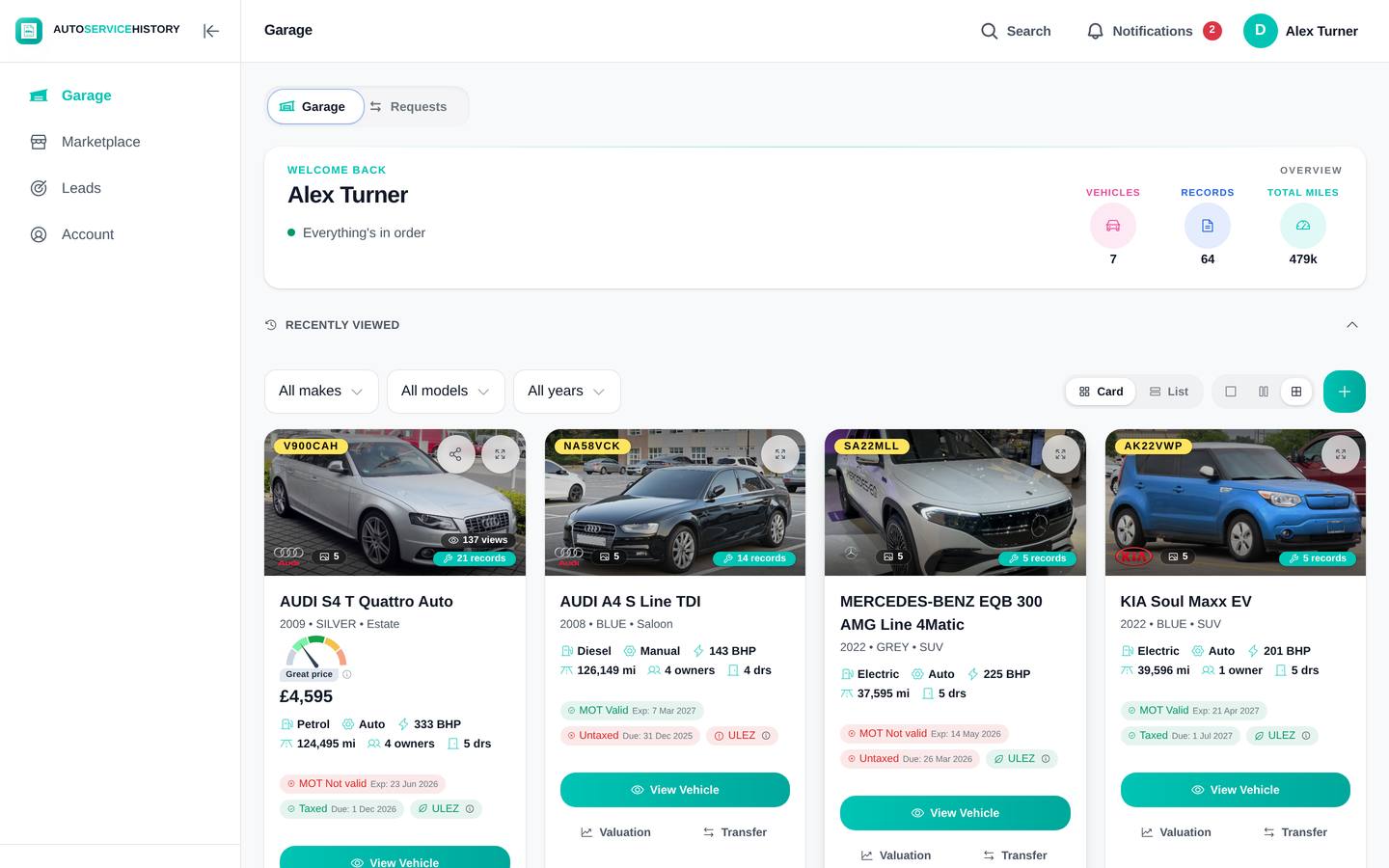
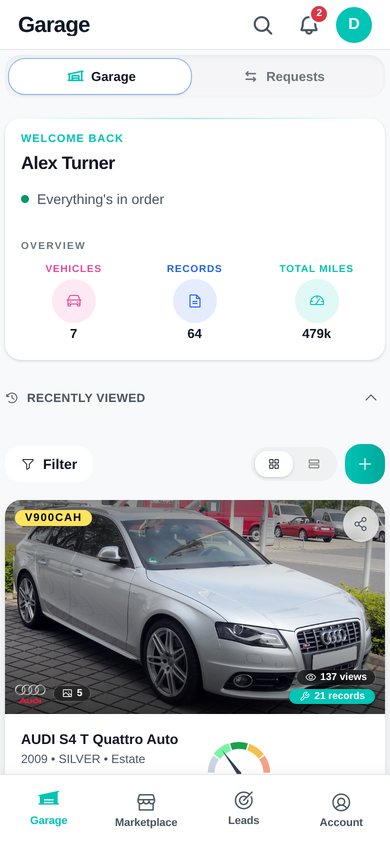
That’s what we built AutoServiceHistory for. Photograph the receipts and invoices and the AI reads them into a dated timeline, grouped by year, with the mileages and costs pulled out. DVLA and MOT data comes in automatically, so you’re not typing anything. If services are missing, we can request the manufacturer’s records — they usually come back within hours, and they often fill gaps you’d written off.
What a buyer gets is a share link, opened with no app and no account: the record, the MOT data, the vehicle details, tied to the car’s VIN. There’s a built-in AI they can ask “is the cambelt done?” — it answers from that car’s record, not from you. You can also print the free A4 “For Sale” sheet with a QR code for the windscreen.
See how the record is put together, have a look at what it does for sellers, and check what’s free — most private owners never pay. See what a complete, checkable history looks like.
The honest short version
- Full = every scheduled service documented. Not “mostly”. Independent garages count.
- Partial = gaps. Common, forgivable, and worth being upfront about in the advert.
- None = the buyer carries the risk, so they price for the worst case.
- Gaps aren’t equal. A missed interim service is noise; a missing cambelt is money.
- Rebuild before you sell — MOT history, old invoices, manufacturer records — then put it somewhere a buyer can check.
FAQ
Does service history have to be main dealer to count as full? No. Full service history means every service the manufacturer’s schedule requires was done and can be evidenced. A good independent garage with proper invoices counts, as does documented DIY work on an older car.
What counts as partial service history? Some services documented, some not — a stamped book missing a year or two, or receipts covering part of the car’s life. If you can’t produce evidence for every scheduled service, it’s partial, however small the gap.
Can I get lost service history back? Often, yes. Start with the free MOT history on GOV.UK, then ask any garage that worked on the car. We can also request the manufacturer’s records, which typically come back within hours.
How much does no service history knock off a car’s value? There’s no fixed figure. On an ordinary used car it usually runs to hundreds of pounds, and more on a premium model where servicing is expensive and buyers are cautious. It also slows the sale.
Do digital service records count? Yes. A dated digital record showing the work, the mileage and the garage is evidence like any invoice — and it’s easier for a buyer to check than a shoebox.