How much should I sell my car for?

Price your car at what similar cars actually sell for — not what hopeful sellers are asking. Start with a market estimate based on your make, model, mileage and condition, then adjust for service history, MOT length and the state of the tyres and bodywork. Add a small margin on top, because most private buyers will try to knock a few hundred off. Get it right and the car sells in a fortnight; get it wrong and it sits on the driveway for months.
Here’s how to land on a number you can defend.
Start with a market estimate, not a guess
Three places to look, in this order:
- A free market estimate. Enter your number plate and mileage and you get a figure based on current market data. It’s an estimate, not a guaranteed price — no tool can promise what a stranger will pay — but it takes about a minute and it beats guessing.
- Live asking prices. Search the big listing sites for your exact model, year, engine and rough mileage. These are asking prices, so treat them as a ceiling rather than a target.
- What actually sold. Watch a handful of similar cars for a fortnight. The ones that vanish quickly were priced right. The ones still listed weren’t.
A trade-in offer is a useful floor, not a target. It’s lower because the dealer has to prepare, warrant and resell the car.
Adjust for the things a valuation can’t see
A valuation knows your car’s age and mileage. It doesn’t know whether you’ve looked after it. Work down this list and move your number accordingly:

- Mileage vs average — 8,000–10,000 miles a year is normal. Well under, price up; well over, price down.
- Service history — full history is worth real money. Gaps cost you.
- MOT — eleven months left is a selling point. Six weeks isn’t.
- Big-ticket jobs — a recent cambelt, clutch or a set of new tyres, with receipts.
- Condition — kerbed alloys, a dented bonnet, a scruffy boot lining. Buyers price these ruthlessly.
- Colour and spec — a sensible colour and a decent options list sell faster.
Set the asking price with room to move
- Take your adjusted figure. That’s your walk-away number.
- Add 5–8% for haggling. Most buyers open low, so you need somewhere to go.
- Mind the search brackets. Buyers filter by round numbers — £10,250 hides your car from everyone searching under ten grand. £9,995 doesn’t.
- Decide your floor before the first viewing, and don’t move below it on the driveway.
Then read the response. No calls in week one means you’re too high. Ten calls on day one means you were too cheap.
Back the price up with proof
The sellers who hold their asking price are the ones who can prove the car has been looked after. A shoebox of receipts does that badly. A record a buyer can check does it well.
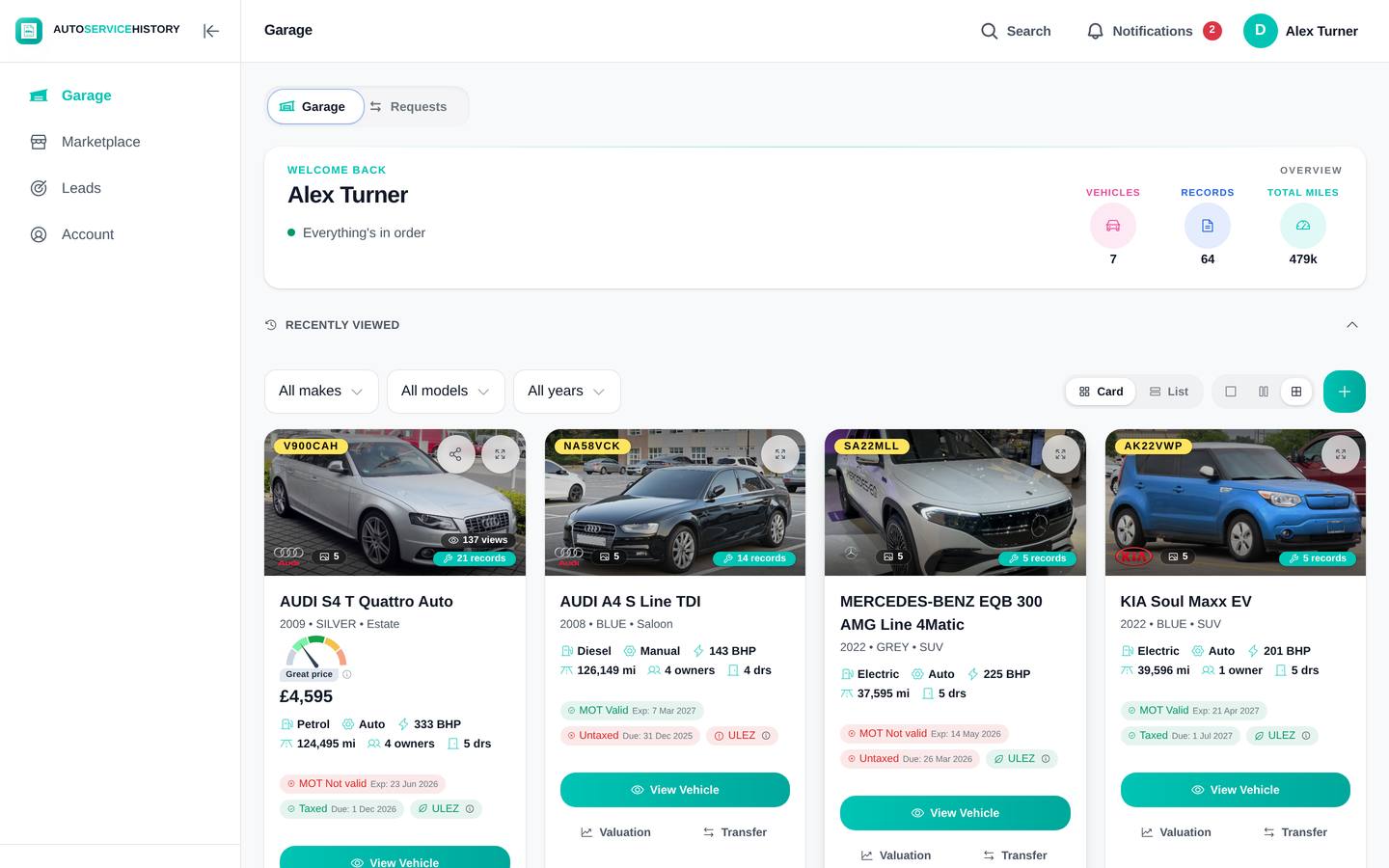
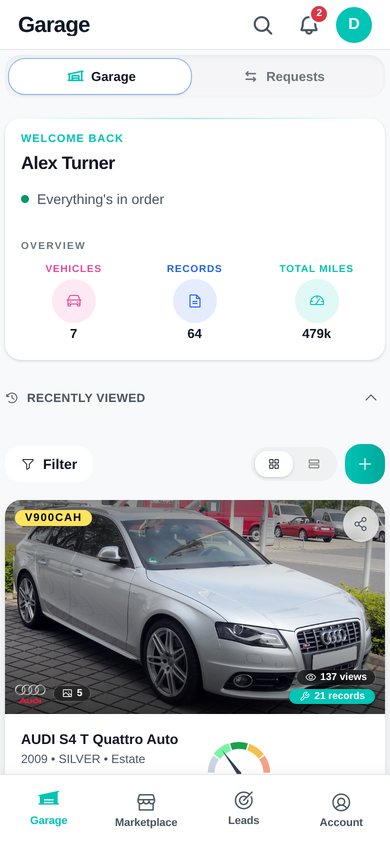
Photograph your invoices and the AI reads them into a dated service record, with DVLA and MOT data pulled in automatically — that’s the service history side of things. If the book has been lost, you can request the manufacturer’s records and they come back within hours. Share the result as one verified report your buyer opens on their phone with no app and no account, plus a free A4 “For Sale” printout with a QR code for the windscreen. See how selling privately works, and what it costs — for most private owners, nothing.
Get a free market estimate and back it with a verified history, and price your car on evidence rather than hope.
Holding your price when the haggling starts
Almost every private sale ends with someone trying to knock a few hundred off — “the tyres will need doing”, “I’ve seen one cheaper”. Some of that is fair. Most of it is testing whether you actually know what your car is worth.
Answer with evidence, not argument. Cambelt done at 68,000 miles? Show the invoice, dated, with the mileage on it. History patchy? Request the manufacturer’s records — they come back within hours — and fill the gap before anyone asks. A buyer who can check the record on their own phone turns up ready to buy rather than ready to negotiate, and the free A4 printout with its QR code does the same job on the windscreen. Here’s what that looks like for a private seller.
Get a free market estimate, then price the car on what you can prove.
The honest short version
- Start with a free market estimate, then check live asking prices and what actually sells.
- Adjust for what a valuation can’t see: history, MOT length, tyres, big jobs, condition.
- Add 5–8% for haggling, and stay the right side of the round-number search brackets.
- Set your floor before the first viewing. Hold it.
- Back the number with proof — that’s what keeps the last few hundred in your pocket.
FAQ
How do I work out what my car is worth? Start with a free market estimate from your number plate and mileage, then check live asking prices for the same model, year and engine. Asking prices are your ceiling and a trade-in quote is your floor; your price sits between the two.
Should I add room for haggling? Yes, but not much — around 5–8% above the figure you’d genuinely accept. Too much and you drop out of buyers’ search filters; too little and you have nowhere to move when someone opens low.
Is an online valuation a guaranteed price? No. It’s a market estimate based on current data for cars like yours. What you actually get depends on condition, history, timing and who turns up. Treat it as an informed starting point.
Does full service history add value? Usually, yes. A complete, checkable record supports a higher price and a quicker sale, because the buyer isn’t quietly pricing in the risk of unknown neglect. Being able to prove it is the part that counts.
How long should a correctly priced car take to sell? One to three weeks privately is normal. Silence in week one means you’re too high; a rush of calls on day one means you were too cheap. Adjust in £250–£500 steps rather than dropping a grand at once.