How to write a car advert that sells
A car advert that sells is specific, honest and complete. Start with the make, model, year, mileage and a realistic price. Add clear daylight photos, describe the condition plainly and back up every service claim with proof. Serious buyers can then decide from the advert alone, which means fewer tyre-kickers and time-wasters.
Here’s how to write each part.
Get the headline and key facts right
Buyers on the big listing sites filter by make, model, age, mileage and price. If you leave one out or make it vague, your car either won’t show up in their search or will look like it’s hiding something.
Write the headline as a fact, not a pitch:
- Make, model and trim: “Skoda Octavia 2.0 TDI SE”, not “Lovely family estate”.
- Year and plate: “2016 (66)”.
- Exact mileage: “78,400 miles”, not “low miles”.
- A selling point you can prove: “full service history”, “new cambelt”.
For the price, compare similar cars nearby and get a valuation. A valuation is a market estimate, not a promise. Then leave £200–£300 for haggling.
Take photos that do the selling
Photos get the click. Wash the car, empty the boot and take the photos in daylight somewhere plain, not beside the bins. Aim for 15 to 20 shots covering:
- Front three-quarter view, which is your main photo
- Rear three-quarter view and both sides
- Dashboard with the ignition on, showing the mileage and no warning lights
- Front seats, rear seats and the boot
- Each tyre, close enough to see the tread
- Under the bonnet
- Any damage: scuffs, kerbed alloys, stone chips
Don’t skip the last one. Damage you show in the advert builds trust. Damage a buyer finds on your driveway costs you money.
Write a description that answers the questions first
Keep the description short and factual, and cover these points in order:
- What it is: engine, gearbox, colour, number of owners.
- Condition: be honest and include the faults.
- History: servicing, when the MOT runs out, and big jobs like the cambelt, clutch or tyres.
- Why you’re selling: one line is enough. Buyers always ask.
- Practical bits: where the car is, when people can view it, and how you’ll take payment.
For example:
2016 Skoda Octavia 2.0 TDI SE estate, manual, grey, 78,400 miles, two owners. Serviced every year, receipts for all of it. Cambelt and water pump changed in 2025. MOT until May 2027. Small scuff on the rear bumper, shown in the photos. Selling because we need a seven-seater. Viewing in Leeds, evenings and weekends.
It’s plain, but it answers “is the cambelt done?” before anyone has to message you.
Prove the service history, don’t just claim it
“Full service history” is easy to write and hard to believe, because it often turns up on cars with three stamps and a gap. If you write it, be ready to show it.
- Gather everything: services, cambelt, tyres, MOT repairs. Check the glovebox and that shoebox of receipts in the loft.
- Put it in date order: the mileages should go up steadily and match the car’s MOT history, which anyone can check free on GOV.UK.
- Fill the gaps: ask the garages that did the work for copies.
- Make it easy to check: a buyer who has already seen the history turns up ready to talk money.
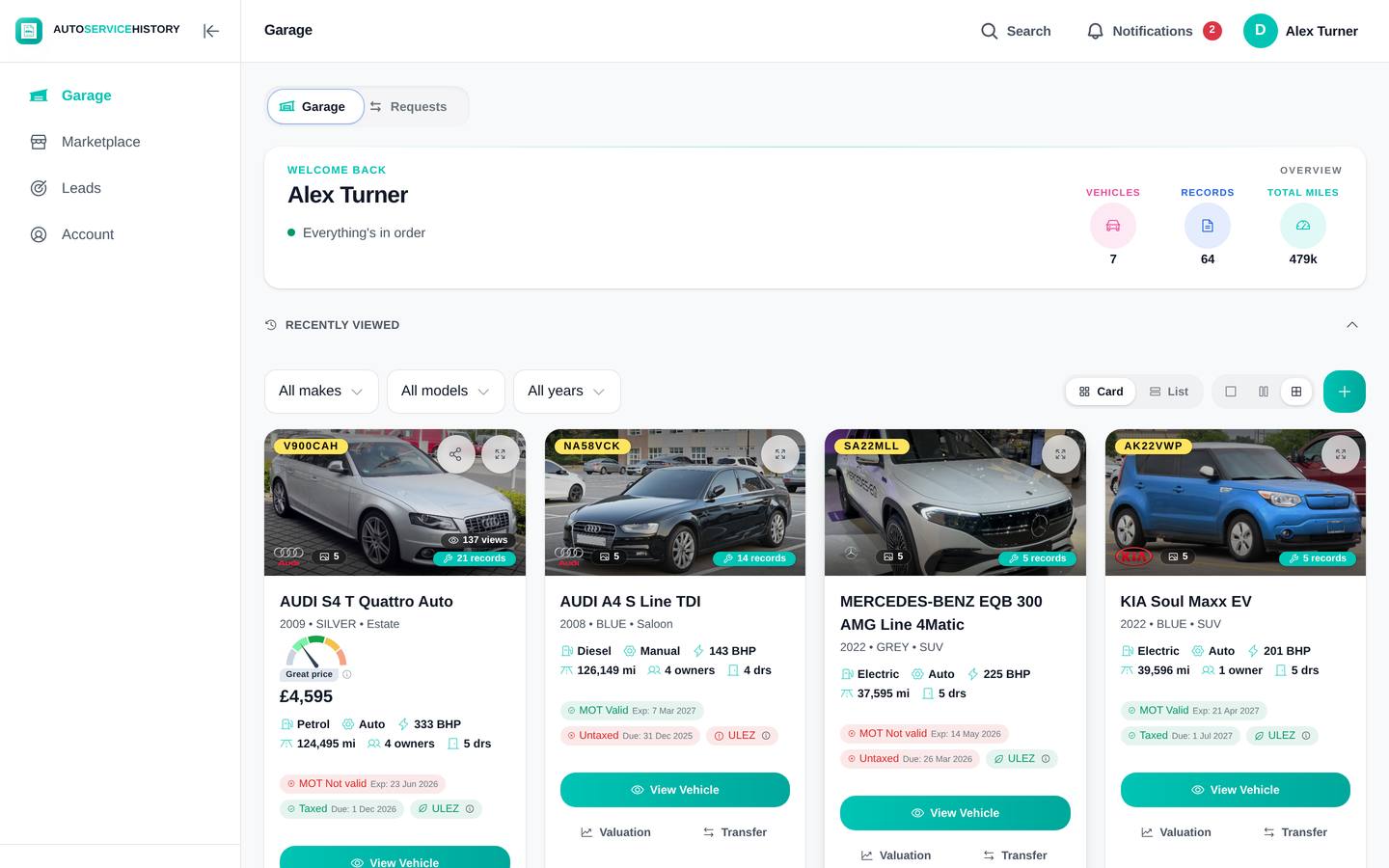
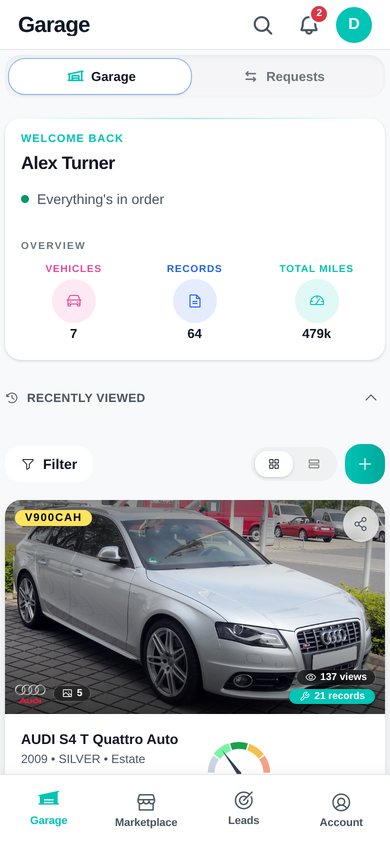
A digital record makes that last step easy. You photograph your receipts and the AI reads them, then sorts the work, costs and mileages by year. See how it works.
Send buyers a link, not a folder
Once your receipts are in AutoServiceHistory, you can share a verified report of the car with a link and a QR code. Paste the link into your advert and any buyer can open it on their phone, with no app and no account. They see the service history, the MOT record and the receipts behind it.
A few other things help a private seller:
- An AI sales agent on the report. It answers buyers’ questions from your car’s actual record, day or night, and books test drives and callbacks.
- A free A4 “For Sale” sheet for the window, with a QR code to the live report.
- Gaps in the book? We can request the manufacturer’s records, which come back within hours.
- Personal details blurred. The AI blurs names and addresses on the copy buyers see.
The free plan has no time limit and needs no card. See what’s included, or start your car’s record when you’re ready.
The honest short version
- Headline: make, model, trim, year, exact mileage.
- Price: based on similar cars and a valuation, with £200–£300 to haggle.
- Photos: 15 to 20 in daylight, damage included.
- Description: what it is, condition, history, why you’re selling, viewings.
- Proof: receipts in date order, easy for a buyer to check.
FAQ
What should I put in a car advert? Make, model, trim, year, exact mileage and price, plus engine, gearbox, number of owners, MOT expiry, service history and any faults. Add 15 to 20 daylight photos and say where and when buyers can view the car.
How long should a car advert description be? Short: a paragraph covering what the car is, its condition, its history, why you’re selling and how viewing works. Buyers skim, so lead with facts and leave out the sales talk.
Should I mention faults in a car advert? Yes. Describe them plainly and photograph them. A fault the buyer already knows about is harder to haggle over on the driveway. Private sellers are also legally required to describe the car accurately.
How do I prove my car’s service history to a buyer? Gather every receipt, put them in date order and check the mileages against the free MOT history on GOV.UK. A digital record with a share link lets buyers check it themselves before viewing.