Should I part exchange or sell my car privately?
Sell privately and you will usually get more for your car. Part exchange and you give up some of that money for speed and far less hassle: one visit, one deal, no strangers on your driveway. On an everyday used car the gap is often several hundred pounds. The question is whether that gap is worth your time.
Here’s how to work it out.
How much less is a part exchange?
A dealer has to make money on your car, whether they sell it on or send it to auction. That margin comes out of your price.
As a rough rule of thumb, a part-exchange offer lands around 10–20% below what a private buyer would pay. On a car worth £8,000 privately, that’s £800 to £1,600.
Look at the whole deal, not just the trade-in figure. A dealer can offer a generous part exchange and quietly trim the discount on the car you’re buying. The number that matters is the cost to change: the next car’s price minus what you get for yours. Ask for it in writing.
When part exchange is worth it
Part exchange is worth it when:
- Your car is worth less than a couple of thousand pounds. The gap in pounds is small, and so is the reward for weeks of messages.
- It has outstanding finance. On hire purchase or PCP, the finance company owns the car until it’s settled. A dealer can clear it within the deal. If you sell privately, you have to settle it first.
- It has a fault or a big bill coming. A dealer prices it in once. A private buyer will haggle over it.
- You want to swap cars in one visit, with no gap between selling and buying.
- Your time is worth more than the difference. If £800 buys back several evenings and a weekend, that can be a fair trade.
The middle option: a car-buying site
Online car-buying services sit between the two. Enter your number plate, get a quote, book an inspection, get paid. It’s quick, and you don’t have to be buying another car. Two things to know:
- The online quote isn’t the final price. It’s confirmed at inspection, where scuffs, service gaps or a missing second key can cut it.
- They’re a trade buyer too. The same margin applies, so expect a figure closer to part exchange than to a private sale.
Get a quote anyway. It’s free, and it gives you a floor to measure the dealer’s offer and any private buyer against.
What selling privately actually involves
The extra money is real, but you earn it. Here’s the job:
- Price it honestly. Compare the same model, year and mileage on the big listing sites, and start a little above where you’d settle.
- Gather the paperwork. V5C, MOT history, service book and the shoebox of receipts. When someone asks “is the cambelt done?”, have the invoice ready, or share the whole lot as one link (how that works for owners).
- Write an honest advert. Good daylight photos, faults listed up front.
- Filter the tyre-kickers and time-wasters. Expect no-shows and cheeky offers.
- Take payment safely. A bank transfer you’ve seen land in your own account, not a screenshot or a cheque.
- Tell the DVLA online the same day, and give the buyer the new keeper slip.
Whichever way you sell, have the history ready
Gaps in the service record cost you money on both routes. A dealer marks the car down at inspection. A private buyer haggles harder, or walks away.
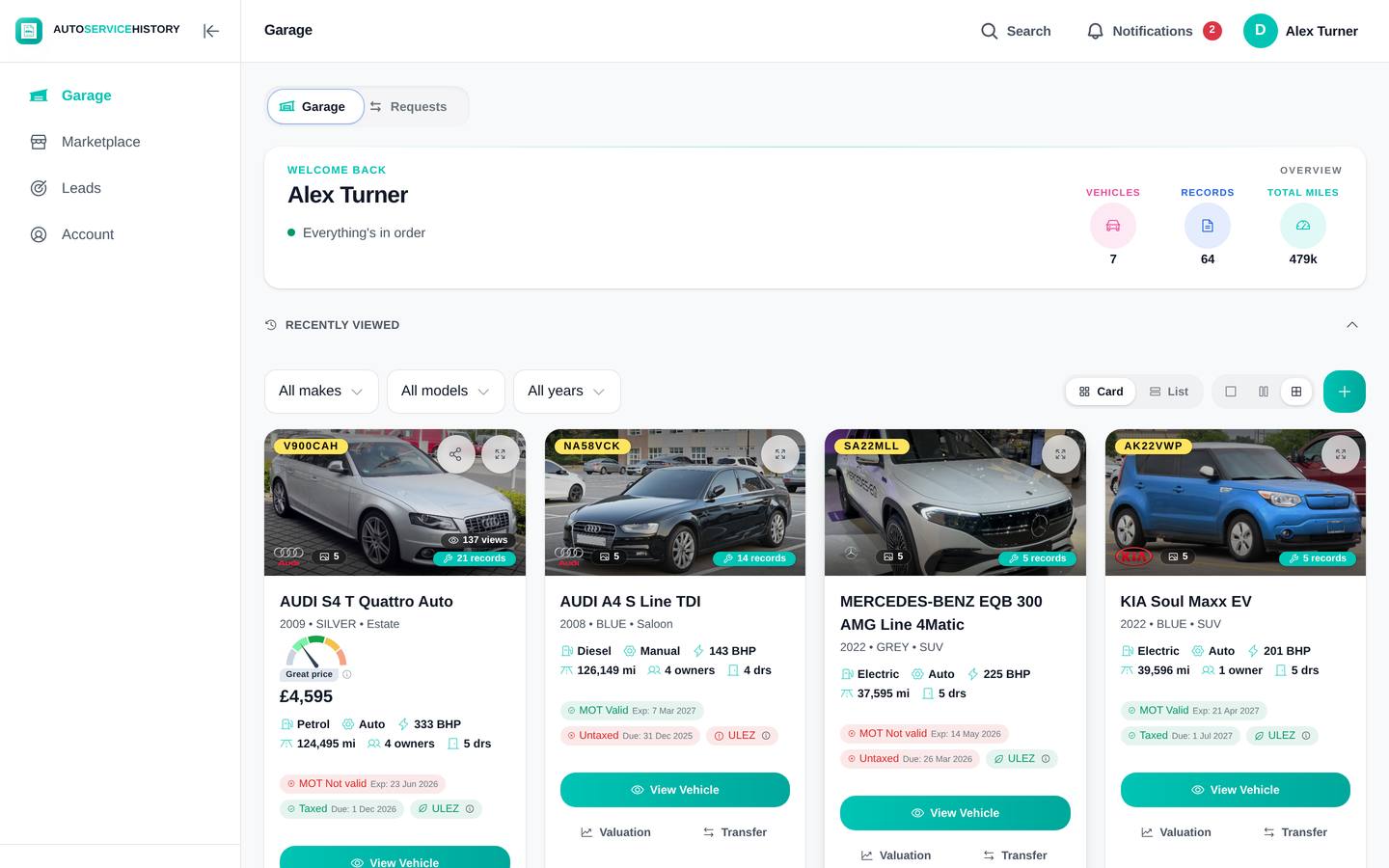
AutoServiceHistory turns the shoebox of receipts into one record. You photograph your invoices and the AI reads them. DVLA and MOT data come in automatically. Then you can:
- Share one link that buyers open with no app and no account.
- Let the car answer questions through a built-in AI agent. It replies from the car’s real record and books test drives.
- Print a free A4 sheet for the windscreen, with a QR code to the live report.
- Check a dealer’s offer against a market estimate of your car’s value.
The free plan has no time limit and needs no card (pricing). See what’s included for owners or how it compares, then start your car’s record when you’re ready.
The honest short version
- A private sale usually pays more. Part exchange often comes in 10–20% lower.
- Part exchange suits cheap cars, cars on finance or with faults, and anyone short of time.
- Judge a trade-in on the cost to change, not the headline figure.
- Get a free online quote so you know the lowest figure to accept.
- Selling privately takes work. Have the paperwork ready first.
FAQ
How much less is a part exchange than a private sale? A part-exchange offer typically comes in 10–20% below a private sale, because the dealer needs a margin. On a car worth £8,000 privately, that’s roughly £800 to £1,600.
Is part exchange worth it? Part exchange makes sense if your car is worth under about £2,000, has outstanding finance or a fault, or your time matters more than the price gap.
Can I sell a car privately with outstanding finance? Not until the finance is settled. On hire purchase or PCP, the finance company owns the car. A dealer can settle it as part of a part-exchange deal.
Do car-buying sites pay more than part exchange? Not by much, usually. Car-buying sites are trade buyers working to a margin. The online quote is confirmed at inspection, where scuffs or service gaps can lower it.
Does service history affect what a dealer will pay? Yes. Service gaps or no proof the cambelt was done both give a dealer a reason to cut the offer. A complete record helps you hold your price, whether you trade in or sell privately.