How to sell your car privately in the UK
Selling privately typically gets you a few hundred pounds more than a trade-in or a same-day online offer — the trade-off is that you do the work yourself. The job breaks down into seven steps: get the paperwork together, price it, photograph it, write the advert, list it, handle viewings and test drives safely, then take payment and tell DVLA. Realistically that’s a couple of evenings of prep and a week or two of messages.
Here’s each step in the order you’ll actually need it.
The whole process, in seven steps
- Gather the paperwork — V5C, MOT history, service records, receipts, both keys.
- Set a price using real asking prices for the same age, mileage and spec.
- Clean it and photograph it properly, in daylight.
- Write an honest advert that answers the obvious questions up front.
- List it on the big classifieds, and share it directly with anyone who asks.
- Screen buyers, then do viewings and test drives safely — insurance, licence, daylight.
- Take payment, hand over the V5C section, and tell DVLA the same day.
Steps 1 to 3 decide what the car sells for. Most people rush them and then wonder why the offers come in low.
Step 1: Get your paperwork straight before anything else
Buyers pay for proof, not promises. Before you photograph the car, put your hands on all of this:
- V5C logbook in your name, with your current address.
- MOT certificate and the free MOT history from GOV.UK.
- Service history — the stamped book, plus every invoice you can find.
- Receipts for the big jobs — cambelt, clutch, tyres, brakes, any major repair.
- Both keys, the locking wheel nut key, and the handbook.
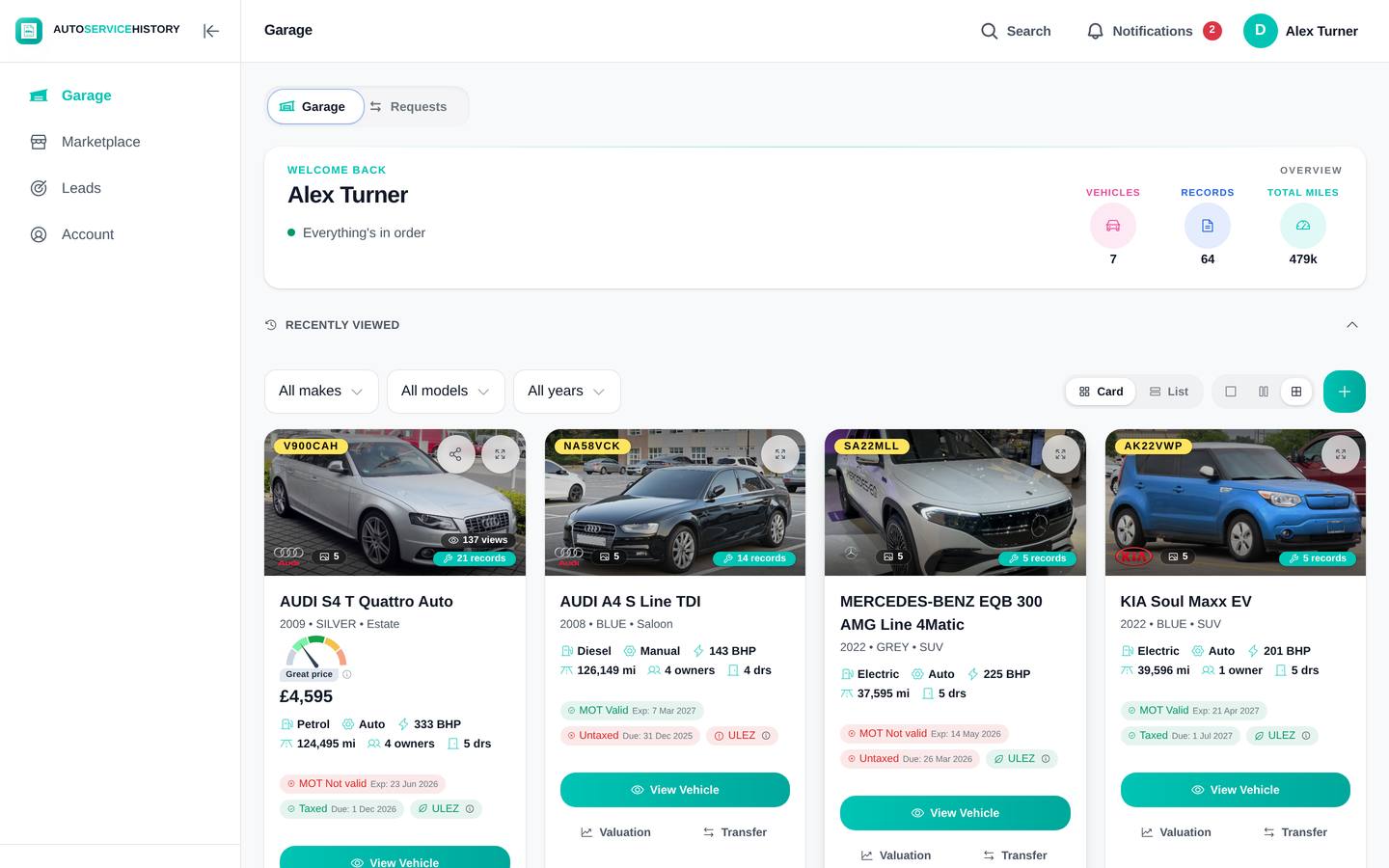
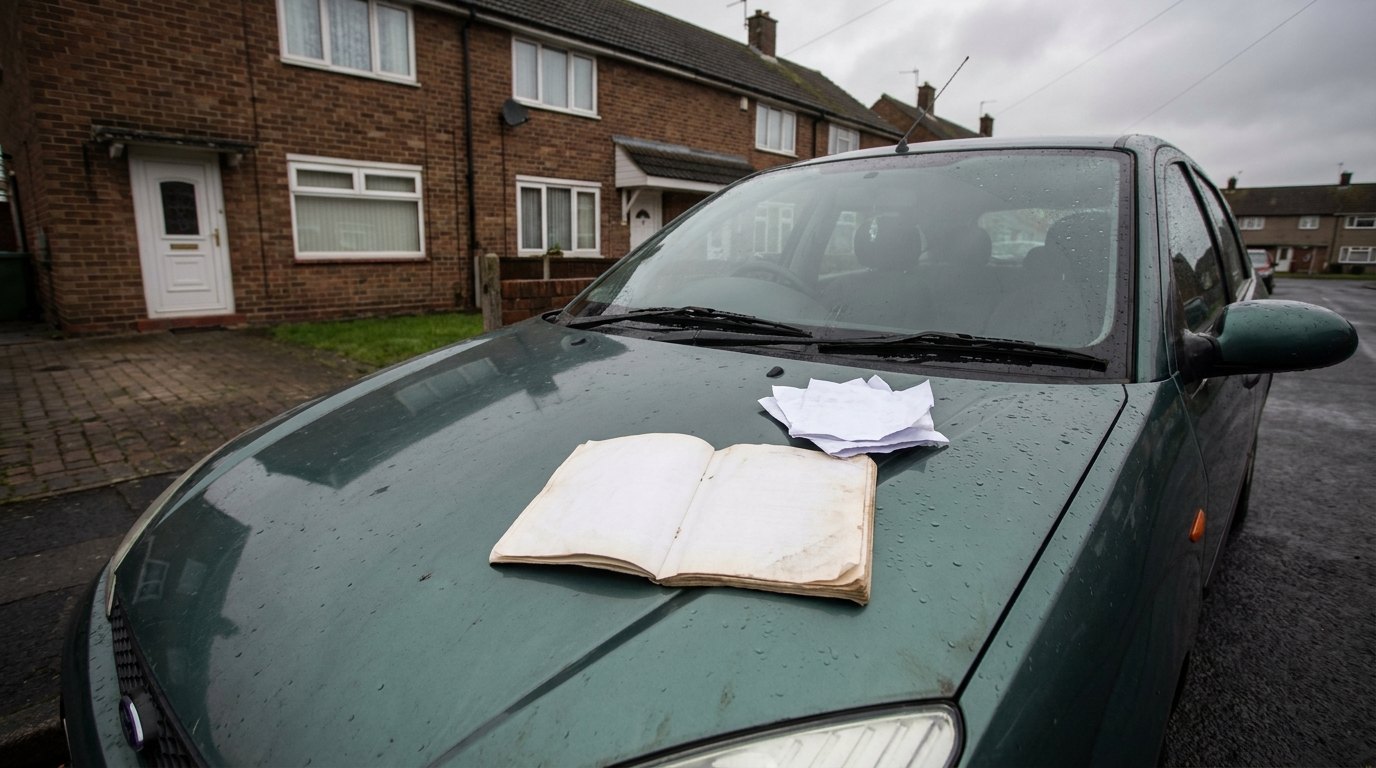
If yours lives in a shoebox of receipts, digitise it. Photograph each invoice and the AI reads them — dates, mileages, line items and costs — into one timeline you can share as a verified report. That’s the core of what AutoServiceHistory does for owners, and it’s free to start.
Gaps in the history? You can request the manufacturer’s records for the car and they usually come back within hours, which often fills in the dealer-serviced years you never had paperwork for. See how record recovery works.
Step 2: Price it with evidence, not hope
Look up what the same car is actually advertised for — same age, same mileage, same trim, same fuel type. Ten live adverts beat one guess. Then adjust honestly:
- Above the middle if the mileage is low, the history is complete and the MOT is long.
- The middle for an ordinary example with a full record.
- Below the middle for missing history, tatty bodywork, or an MOT running out.
A valuation tool gives you a market estimate, not a guaranteed price — treat it as a starting point and let the condition and the paperwork move it. Leave yourself £200–£400 of haggling room, and decide your walk-away number now, before someone stands in your driveway making a cheeky offer.
Step 3: Photograph it properly, then write a plain advert
Wash it, clear the boot and the footwells, and shoot on an overcast day or in early evening light against a plain background. Take 15 to 20 photographs: front three-quarter, both sides, rear, interior, dashboard with the mileage showing, boot, engine bay, tyres, and close-ups of every scratch or dent.
Photographing the damage sounds mad. It isn’t — it kills the “you didn’t mention this” haggle at the kerbside, and it filters out the tyre-kickers before they turn up.
Give buyers something they can check
Most private sales stall in the same place: the buyer wants proof, and you’ve got a carrier bag of paper.
Once your receipts are in, AutoServiceHistory turns them into a verified report you share as a link or a QR code — no app, no account, nothing for the buyer to sign up to. DVLA and MOT data are pulled in automatically, so nothing gets typed twice. See what’s in a report.
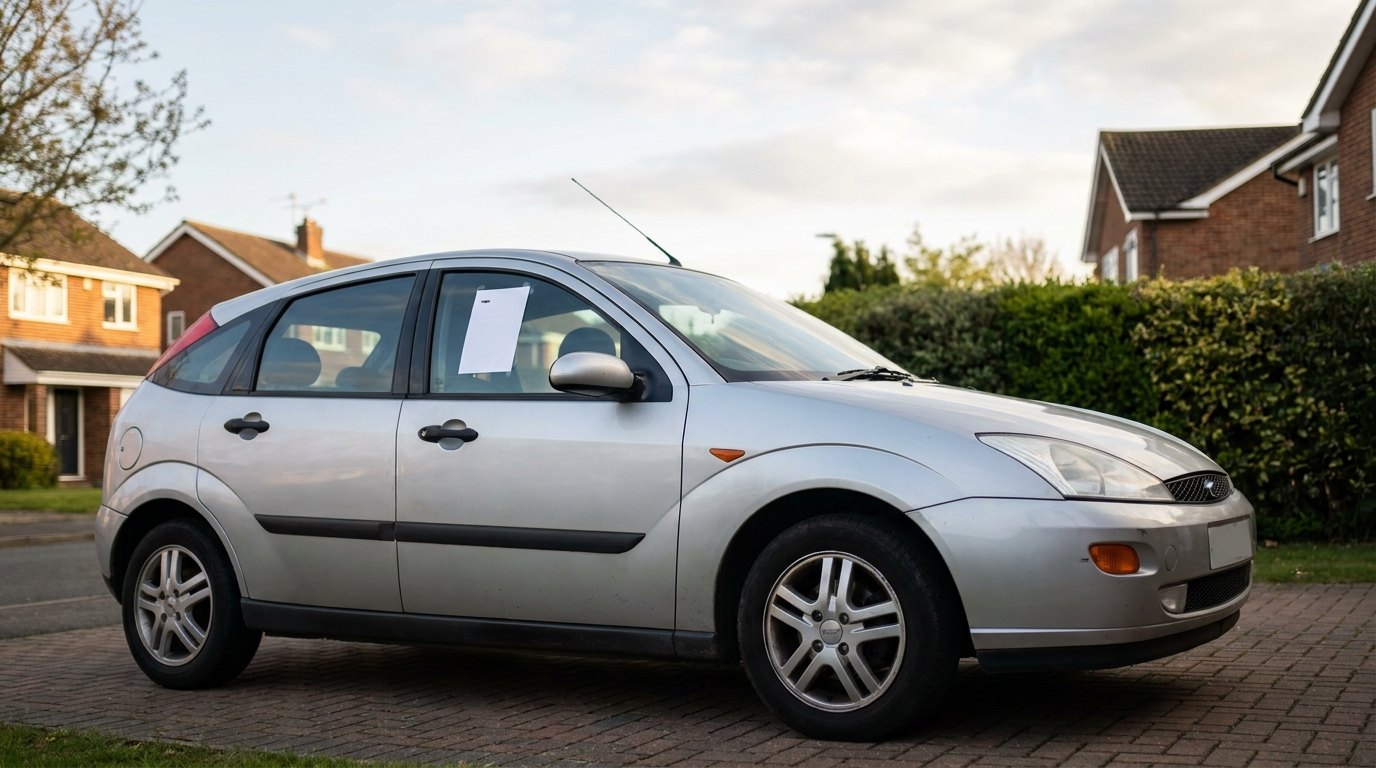
Two parts do the tedious work while you’re asleep. Every shared report has an AI agent that answers questions from that car’s actual record — “is the cambelt done?”, “who serviced it?” — and passes on the serious enquiries. You also get a free A4 “For Sale” sheet with the QR code on it for the windscreen or the back window. Print as many as you like.
Personal details on your invoices get blurred on the shared copy, so your address isn’t doing the rounds. More for owners, or get started free and set your report up before you list.
The honest short version
- Paperwork first — V5C, MOT history, service records, receipts, both keys.
- Price against ten live adverts, then adjust for condition and history. Decide your walk-away number now.
- Clean it, photograph it in flat daylight — and photograph the damage too.
- Write plainly: spec, mileage, history, known faults, price, and why you’re selling.
- Screen callers. Viewings in daylight, at your address, with someone else in the house.
- Check licence and insurance before any test drive, and go along for the ride.
- Bank transfer only, confirmed in your own account — then hand over the V5C section and tell DVLA the same day.
FAQ
How do I take payment safely in a private car sale? Bank transfer, checked in your own banking app before the keys change hands. Don’t rely on a screenshot, a text message, or a cheque. Cash means counting it and a trip to the bank, so most sellers avoid it.
What paperwork do I need to sell a car privately in the UK? The V5C logbook in your name, a valid MOT certificate, your service records and receipts, both keys and the handbook. A written receipt signed by both of you, stating “sold as seen, trade sale” terms and the mileage, protects you afterwards.
Do I have to tell DVLA when I sell my car? Yes, on the day of the sale. Complete the “new keeper” section of the V5C, give that slip to the buyer, and notify DVLA online. Until you do, you remain the registered keeper for fines and tax.
Can I sell a car privately with no service history? You can, but expect a lower price. Pull the free MOT history, gather any receipts you have, and request the manufacturer’s records — those usually come back within hours and often fill in the dealer-serviced years.
Is it safe to let a stranger test drive my car? Only after you’ve seen their driving licence and proof they’re insured to drive it, and only if you’re in the passenger seat. Photograph the licence, and check your own policy covers a test drive first.