How to spot a cloned car in the UK before you buy

A cloned car is a stolen car wearing someone else’s identity — usually the number plate, and often a forged V5C, copied from a legitimate vehicle of the same make, model and colour. You spot one by checking the VIN everywhere it appears on the car, confirming it matches the V5C and the number plate, then testing whether the car’s story holds up against its official records. If those numbers disagree, stop: walk away, and report it to the police and DVLA.
Here’s the order to run those checks in, before any money leaves your account.
What cloning actually is — and why the loss lands on you
Cloning is identity theft for cars. A thief takes a stolen vehicle, fits plates copied from a near-identical car that’s legally on the road, and often supplies paperwork to match. The listing looks ordinary. The price is usually a little keen, but not absurd.
The problem is what happens afterwards. If you buy a stolen car, you don’t own it — it goes back to its rightful owner or the insurer, and you’re left chasing a seller who has vanished. You lose the car and the money. That’s why these checks happen before you hand anything over, not after.
Check the VIN in three places before anything else
The VIN is the car’s real identity. The plate is just a label. Compare them:
- The V5C logbook — the VIN is printed in section 4. Check the document is genuine: DVLA publishes serial-number ranges for stolen blank V5Cs, so check the serial in the top-right corner against their list.
- The windscreen or scuttle plate — visible through the bottom of the windscreen on most cars.
- The stamped VIN on the body — usually under the bonnet, on a door pillar, or under the boot floor. Take a torch.
All three must match each other, and the V5C details must match the car in front of you: colour, engine size, number of previous keepers. If you photograph a VIN with our app, the record comes straight back — no typing, no transcription errors.
The paperwork and the deal itself
Cloners rely on you being polite and in a hurry. Some things that should slow you right down:
- Signs of tampering — a VIN plate that looks riveted, glued, scratched or freshly painted.
- A “new keeper” slip instead of a full V5C, or a logbook the seller won’t let you photograph.
- The address on the V5C doesn’t match where you’re viewing the car. Always view at the registered keeper’s address, never a car park or a layby.
- Cash only, and pressure to decide today. Bank transfer to a named account gives you a trail.
- A price well under the going rate for the mileage and condition.
Cross-check the car’s story with its own records
Pull the free MOT history on GOV.UK using the number plate, and use DVLA’s vehicle enquiry service to confirm colour, engine size and tax status. Then read it like a biography: the mileage should climb steadily, the test locations should fit a car that’s lived where the seller says it has, and advisories should match what you can see. A car with a spotless southern history and fresh underbody corrosion deserves a hard second look.

Service records tied to the VIN — not to the plate — are the part a cloner can’t fake, because the numbers have to line up across every record the car has ever generated.
Where a record tied to the VIN helps
A cloner can copy a number plate in an afternoon. Copying a car’s whole documented life is harder, because every record has to agree with every other one.
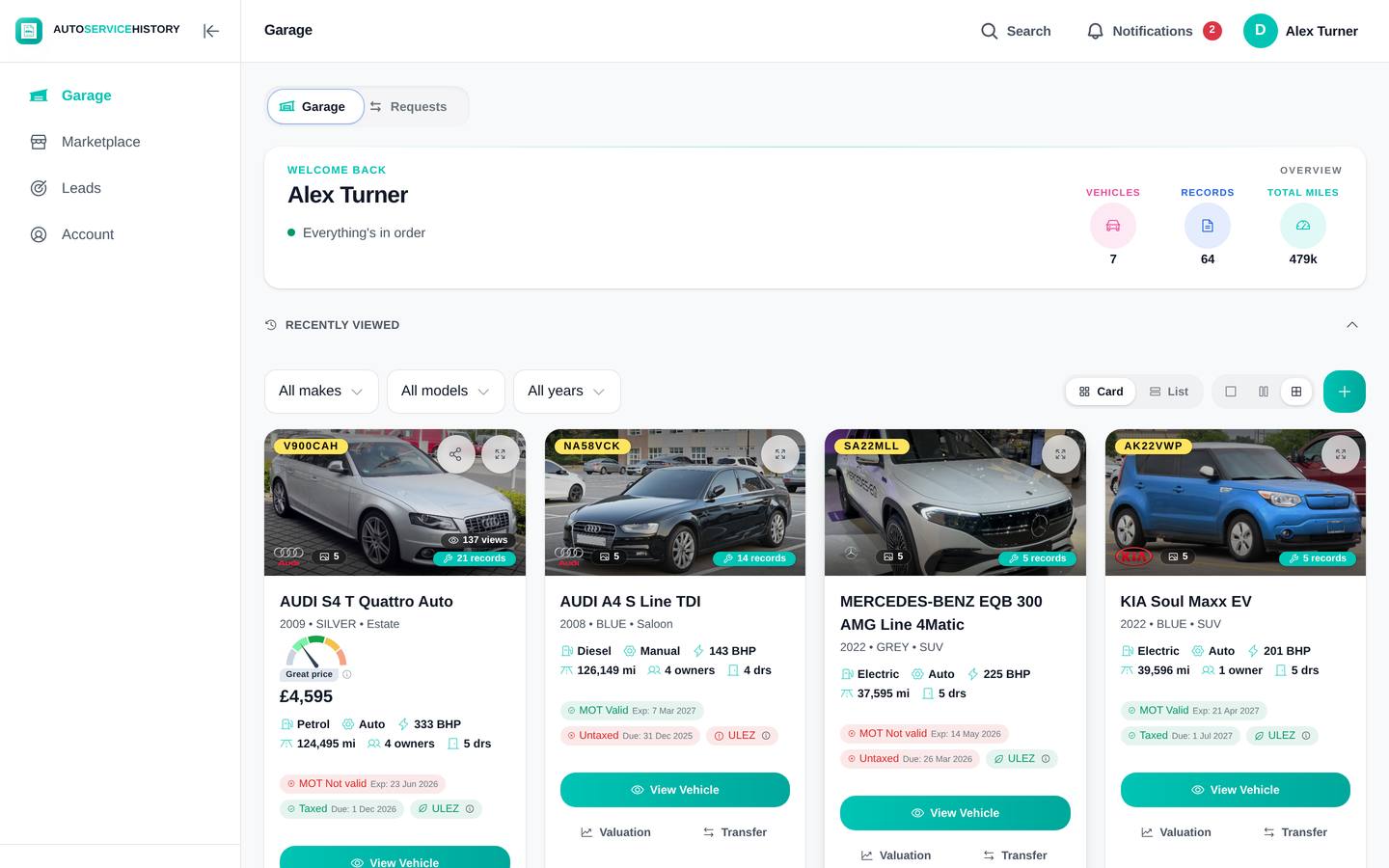
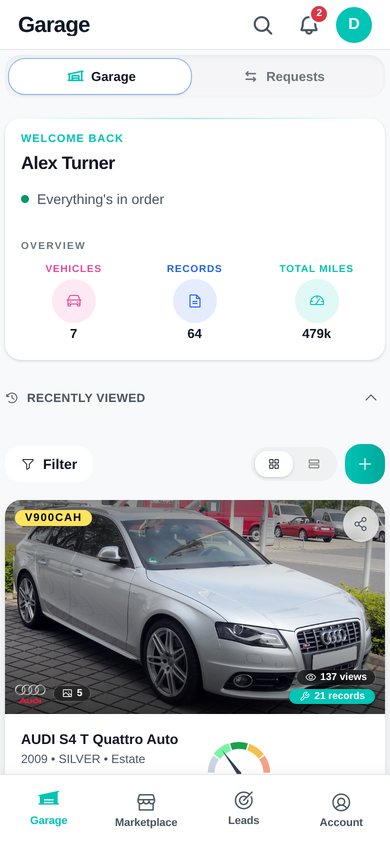
That is what AutoServiceHistory is built around: a record tied to the VIN, and one VIN gets one record. Photograph the VIN and the vehicle comes back with its DVLA and MOT data attached, and the AI reads your receipts into a dated, mileage-stamped timeline. Where the paper history has gone missing, we request the manufacturer’s records and they come back within hours.
For a buyer, the useful part is the share link. A seller can send you a verified report you open with no app and no account, and you can ask it questions — “when was the cambelt changed?” — and get answers from the car’s own record rather than from the person selling it. Owners can set one up free: no card, no time limit.
One VIN, one record — see how a vehicle passport works.
The honest short version
- Match the VIN in three places — V5C section 4, the windscreen plate, the stamp on the body.
- Check the V5C serial against DVLA’s stolen-blank ranges, and view at the keeper’s registered address.
- Read the free MOT history and the DVLA vehicle enquiry — colour, engine and mileage should fit the seller’s story.
- Treat a keen price, cash-only pressure or a logbook you can’t photograph as reasons to slow down.
- If anything disagrees, walk away, then report it to the police and DVLA.
FAQ
What should I do if I think a car is cloned? Walk away rather than challenge the seller. Report it to the police on 101 with the number plate, VIN and the advert, and tell DVLA. If you have already paid, contact your bank straight away and report it to Action Fraud.
Where do I find the VIN on a UK car? Three places: section 4 of the V5C, a small plate visible through the bottom of the windscreen, and a stamp in the body — usually under the bonnet, on a door pillar or under the boot floor. All three should read the same 17 characters.
Does a provenance check show whether a car is cloned? Not on its own. Those checks report finance, write-off and stolen markers held against a registration, and a cloned car is wearing an innocent car’s plate — so the result can look clean. Matching the VIN on the car to the VIN on the V5C is the check that catches it.
If I buy a cloned car, do I get to keep it? No. A stolen vehicle stays the property of its rightful owner or their insurer and will be seized, whatever you paid. Your only route to the money is the seller, who is usually long gone.