Should I buy a Cat N or Cat S car?
A Cat N or Cat S car can be a sensible buy, but only if the repair was done properly and the price reflects the risk. Cat N means the damage didn’t touch the car’s structure. Cat S means it did, and the structure was repaired. Either way, you should pay less, expect higher insurance and get less back when you sell.
Here’s what the categories mean and how to check one before you hand over any money.
What Cat N and Cat S actually mean
When an insurer decides a car isn’t worth repairing, it writes the car off and gives it a category:
- Cat A: scrap entirely.
- Cat B: break for parts. The shell is crushed.
- Cat S: repairable structural damage, such as the chassis, crumple zones or frame.
- Cat N: repairable non-structural damage, such as panels, lights, electrics or trim.
Only S and N can go back on the road. They replaced Cat C and Cat D in 2017, and the marker stays with the car for good.
A write-off doesn’t always mean a big crash. On an older car, a headlight, a bonnet and a deployed airbag can cost more than the car is worth.
Cat N vs Cat S: the honest trade-off
The discount is the point. As a rough guide, Cat N cars often sell for 20–30% less than a clean equivalent, and Cat S cars for more than that. The catch is that you hand the same discount on to the next buyer, so your resale value drops too.
- Cat N: lower risk, smaller saving. Worth a look if you want a cheaper car and plan to keep it for years.
- Cat S: bigger saving, more to verify. A good structural repair is safe. A poor one may not show itself until the car is in another crash.
If you can’t get proof of who did a Cat S repair and how, leave it.
How to check a Cat N or Cat S car before you buy
- Run a vehicle history check. It confirms the category, the write-off date and any outstanding finance. If the seller didn’t mention the category first, that tells you something.
- Ask what the damage was. Was it front, rear, side or flood? Ask for photos taken before the repair.
- Ask who repaired it. A named bodyshop with an itemised invoice beats “a mate did it”. For Cat S, ask whether the body was measured on a jig.
- Read the free MOT history on GOV.UK. Look at advisories since the write-off date, such as uneven tyre wear, suspension faults or warning lights.
- Look for the tells. These include mismatched paint, uneven panel gaps, overspray on rubber seals and new bolts on an old car.
- Pay for an independent inspection. It typically costs £100–£250, which is cheap next to a bad repair.
That invoice is part of the car’s history. If the seller keeps their records digitally, it can sit alongside the MOT data in one shareable record.
Insuring a Cat S or Cat N car, and selling it on
- Tell your insurer. Hiding the category can invalidate your cover, which means a refused claim when you need it.
- Get quotes before you buy. Some insurers won’t cover a Cat S car at all. Others will, but charge more.
- Expect a lower payout. If it’s written off again, the insurer values it as a Cat car, not a clean one.
- Check finance early. Some lenders won’t finance a Cat S car.
- Keep every repair invoice. The next buyer’s history check will show the category, and paperwork is what turns a hard sell into a fair one.
Keep the repair on the record
The next buyer will ask the questions you’re asking now. Make the answers easy to check.
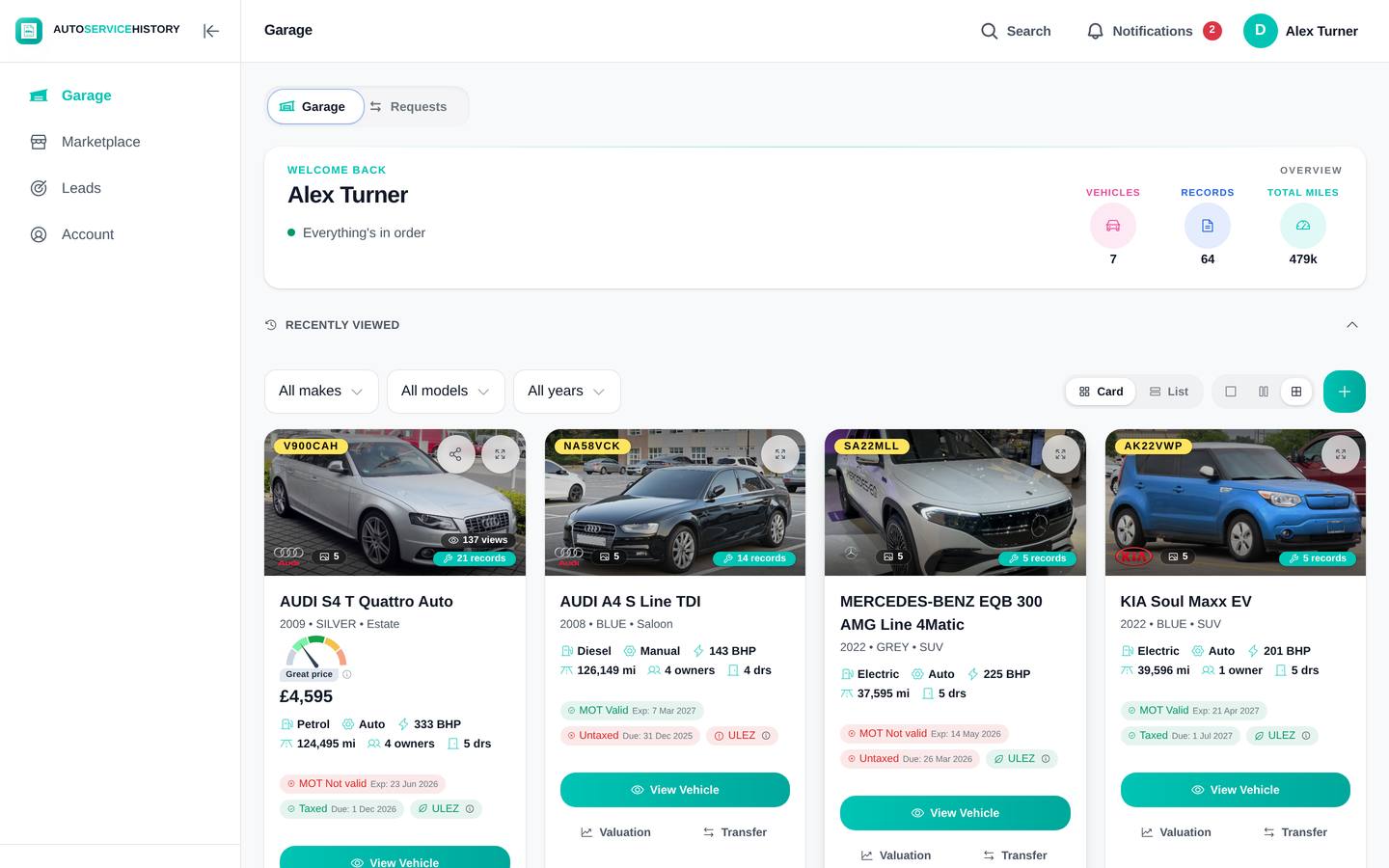
If you buy a Cat car, photograph the repair invoice and add it to the car’s record on AutoServiceHistory. The AI reads your receipts and files the costs and mileages by year, next to the DVLA and MOT data that’s pulled in automatically. Earlier service history missing? You can request the manufacturer’s records, which come back within hours.
When you sell, share one link. The buyer opens a verified report with no app and no account, and can ask its built-in AI who did the repair. It answers from what’s on the record, so the invoice does the talking. Buying one instead? Ask the seller if there’s a link.
See what goes in the record and how it compares with the alternatives. The free plan has no time limit and needs no card, so start a record when the paperwork’s to hand.
The honest short version
- Cat N: non-structural damage. Smaller saving, lower risk.
- Cat S: repaired structural damage. Bigger saving, more to prove.
- Run a history check, read the MOT history and pay for an independent inspection.
- No repair invoice on a Cat S? Walk away.
- Get insurance quotes before you buy, and declare the category.
- Keep every invoice. It makes the resale easier.
FAQ
What’s the difference between Cat N and Cat S? Cat S and Cat N are the two repairable insurance write-off categories. Cat S means structural damage, such as to the chassis or crumple zones. Cat N means non-structural damage, such as to panels, lights or electrics.
Is a Cat N car safe? A Cat N car can be safe. The damage didn’t affect its structure, so the quality of the repair is what matters. Ask for the repair invoice, check the MOT history since the write-off and get an independent inspection.
Do I need to declare Cat N or Cat S to my insurer? Yes. Not declaring the write-off category can invalidate your cover, so a claim could be refused. Some insurers won’t cover a Cat S car at all, so get quotes before you buy.
Can a Cat N or Cat S marker be removed? No. The write-off category stays with the car permanently, and every future buyer’s history check will show it. Keeping the repair invoices makes the car easier to sell on.