What questions should I ask when buying a used car?
Ask about three things: the car’s history, its paperwork and the seller’s story. Find out how long they’ve owned it and why they’re selling. Ask whether it has a full service history, when the cambelt was last changed and whether any finance is still owed on it. If an answer comes with paperwork to back it up, that’s a good sign. If it’s vague, dig deeper or walk away.
Here’s what to ask, and when to ask it.
Questions to ask on the phone first
A ten-minute call can save you a wasted Saturday.
- “I’m calling about the car you’re selling.” Don’t say which car. If they reply “which one?”, you may be talking to a trader posing as a private seller.
- “How long have you owned it, and why are you selling?” You want to hear years of ownership and a dull reason, like “we needed something bigger”.
- “Is it registered to you, at your address?” You want a yes, and you want to view the car at that address.
- “Is there any finance outstanding?” If there is, the car may not be theirs to sell.
- “How many keys come with it?” A replacement key can cost hundreds of pounds.
Questions about service history and the big jobs
- “Does it have a full service history?” Then ask what they mean by that. You want every service done on time, each with a stamp or an invoice.
- “Who did the servicing?” A main dealer, an independent garage or the owner can all be fine. No record at all is the worry.
- “Is the cambelt done? When, and at what mileage?” On many engines a snapped cambelt wrecks the engine. Ask for the date, the mileage and the receipt.
- “Any big work recently?” Think clutch, brakes and tyres. On a hybrid or electric car, ask about battery health too.
“I’m sure it was done” isn’t proof. Ask the seller to bring the shoebox of receipts to the viewing. If they keep the history online, ask for the link before you travel. A shareable service record opens in your browser with no app or account.
Questions about the paperwork and the money
- “Can I see the V5C logbook?” The name and address should match the seller’s. The VIN should match the one on the car, usually at the base of the windscreen.
- “When does the MOT run out, and were there any advisories?” Then look up the MOT history yourself on GOV.UK. It’s free and you only need the number plate. The mileage should go up at every test.
- “How would you like to be paid?” A bank transfer when you collect the car leaves a record. Never pay a deposit on a car you haven’t seen.
Questions to ask at the viewing
- “Has it been started today?” Ask the seller beforehand not to start it before you arrive. A warm engine can hide starting problems and smoke.
- “Any warning lights or faults I should know about?” Then check the dashboard yourself. Make sure the mileage is higher than at the last MOT.
- “Can I take it for a test drive?” Sort your insurance first, and drive it on a mix of roads.
- “Would you mind if I had it inspected?” A seller with nothing to hide has no reason to say no.
Finally, compare their answers with what they told you on the phone. If the story has changed, take note.
Where a shared service record helps
Every question above comes down to one thing: can the seller back it up?
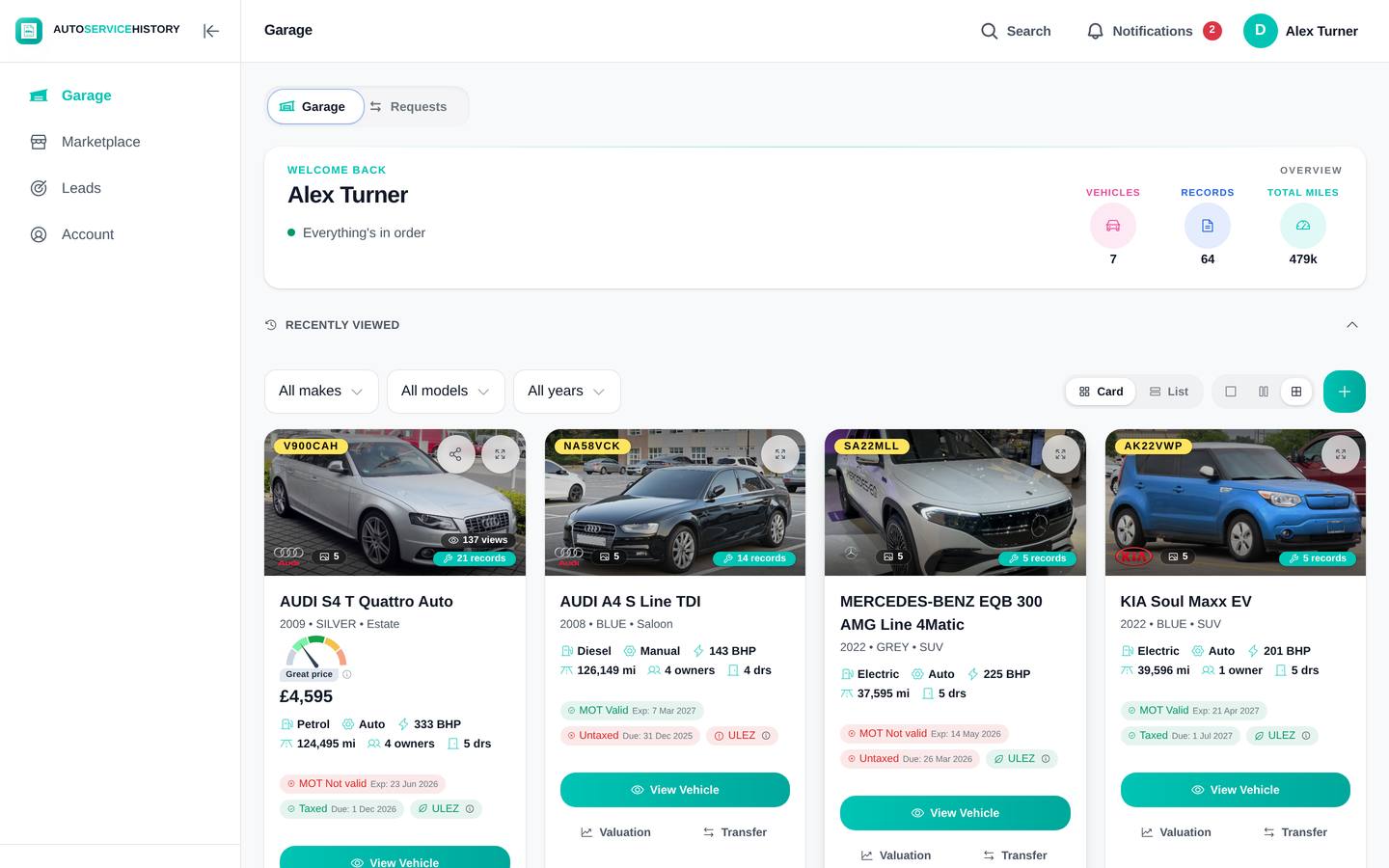
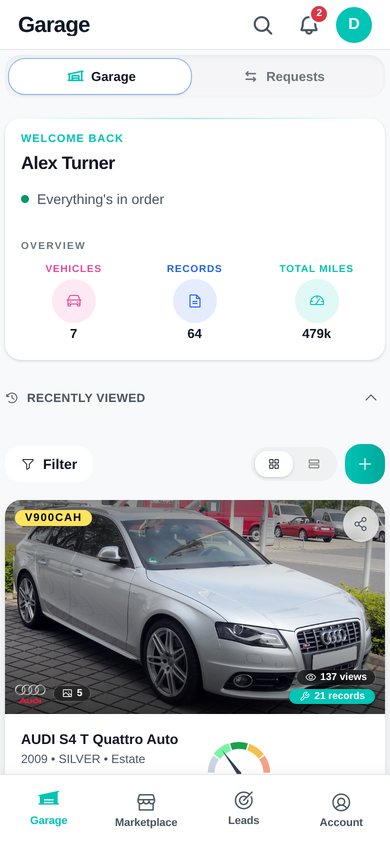
If the seller keeps their records on AutoServiceHistory, ask for the link before you travel. It opens in your browser with no app or account. It shows the service history, MOT data and DVLA details together.
Each report also has an AI assistant that answers at any hour. Ask it “is the cambelt done?” and it replies from the car’s record, not a sales script. Here’s what a shared report includes.
Selling your own car next? See how it works for owners. The free plan has no time limit and needs no card. Start your car’s record so the answers are ready when a buyer rings.
The honest short version
- Phone first: how long they’ve owned it, why they’re selling, whether it’s registered to them, finance and keys.
- History: who did the servicing, and when the cambelt was done.
- Paperwork: the V5C matches the seller, and you’ve checked the MOT history yourself.
- Money: pay by bank transfer when you collect, and never pay a deposit on a car you haven’t seen.
- Viewing: a cold engine, a test drive and an inspection.
- Trust answers that come with paperwork. If the story changes, walk away.
FAQ
What should I ask a private seller on the phone? Ask how long they’ve owned the car, why they’re selling, whether it’s registered to them, whether any finance is outstanding and how many keys it has. If they ask “which car?”, they may be a trader.
How can I tell if a used car has a full service history? Ask to see every service, each with a stamp or invoice. The mileages should fit the car’s MOT history, which is free on GOV.UK. A few stamps with long gaps between them means partial history, not full.
What should I ask about the cambelt? Ask when the cambelt was last changed, at what mileage, and to see the receipt. On many engines a snapped cambelt wrecks the engine, so “I’m sure it was done” isn’t proof.
How do I check a used car’s mileage is genuine? Check the car’s MOT history free on GOV.UK. The mileage at each test should go up every time, and the dashboard should read higher than at the last MOT.
How should I pay for a used car bought privately? Pay by bank transfer when you collect the car, after checking the V5C matches the seller. A transfer leaves a record. Never pay a deposit on a car you haven’t seen.