How do I take payment safely when selling a car privately?
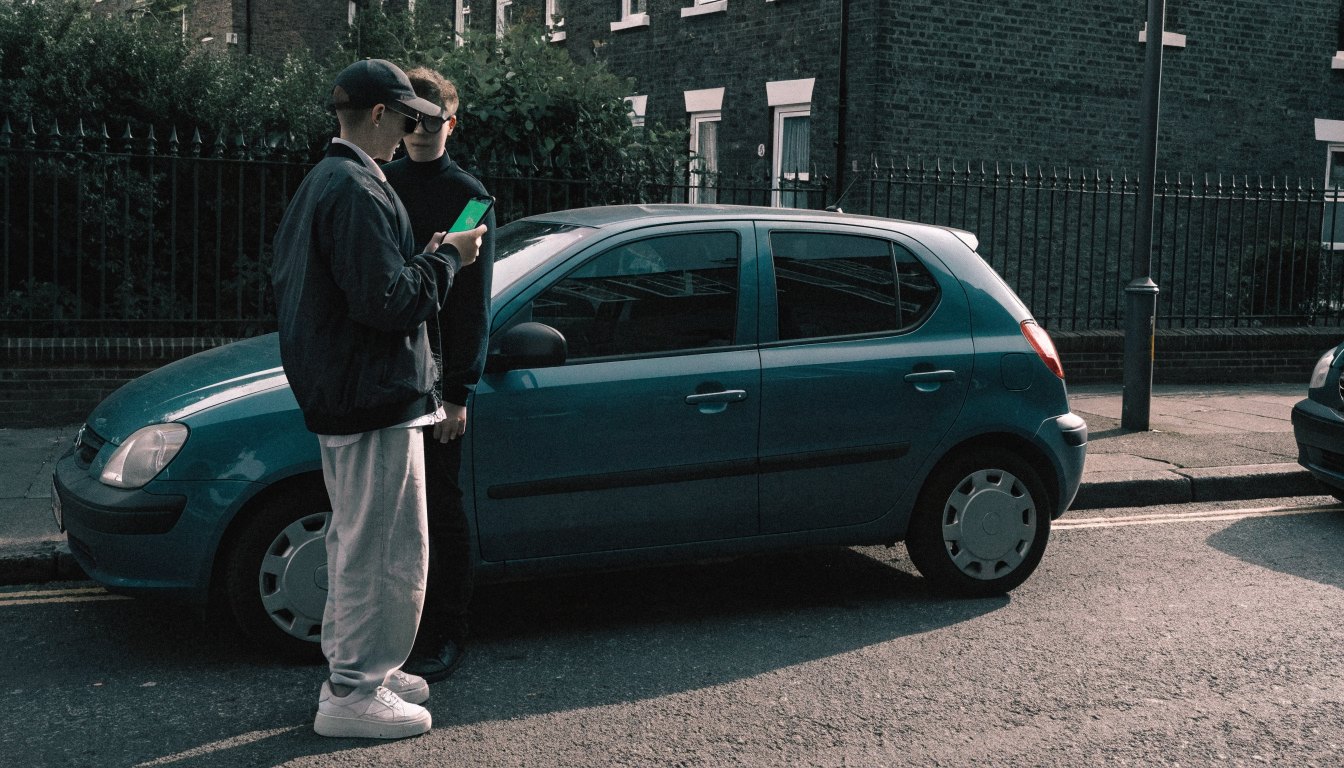
Take payment by bank transfer, and don’t hand over the keys, the V5C or the car until the money is showing in your own account. Not on the buyer’s phone screen, not in a confirmation email — in your balance, when you check it yourself. Cash can work for smaller amounts if you can count and check it properly, but everything else — cheques, banker’s drafts, payment apps, part-payment promises — is where private sellers get caught.
The money is the one part of a private sale that can’t easily be undone. A buyer who changes their mind about the car simply goes away. A payment that reverses three weeks later takes the car with it. Here’s how to run the money side without losing any sleep over it.
Bank transfer: what “paid” actually means
Faster Payments usually moves money in minutes, but “usually” is doing some work in that sentence. Transfers get held up by fraud checks, and banks cap how much can leave an account in a day.
- Check your own account. Open your banking app yourself. A screenshot proves nothing — they’re trivially faked.
- Watch the name check. When the buyer sets you up as a payee, their bank confirms whether your name matches the account. Any mismatch needs explaining before anything else happens.
- Warn the banks in advance. Ask the buyer to tell their bank a large payment is coming, and tell yours you’re expecting one. Daily limits vary, and a car often exceeds them.
- Wait for the full amount. If it arrives in instalments across two days, the car stays on your drive until the last one lands.
- Know the fallback. If the price is above the buyer’s transfer limit, CHAPS arranged at their branch settles the same working day for a fee. Slower to set up, but it arrives as cleared funds.
- Nervous? Meet at a branch. Doing it in person during opening hours costs an hour and settles a lot of nerves.
If the buyer wants to pay cash
Cash removes the reversal risk and adds a handling one. Count it somewhere private rather than on the driveway, check the notes properly, and agree in advance that you’ll both go to your bank to pay it in. Expect the cashier to ask where it came from — that’s routine, and your receipt and the V5C answer it. If the amount is large enough that carrying it worries you, that’s your answer: ask for a transfer instead.
The payments to be wary of
Every one of these is a known private-sale scam, not a theoretical risk.
- Cheques and banker’s drafts. They can appear to clear and then be reversed weeks later. Forged drafts exist.
- “Friends and family” app payments. No protection, and some payment types can be pulled back after the car has gone.
- The overpayment. A buyer “accidentally” sends too much and asks you to refund the difference. The original payment then reverses.
- Deposits from someone who won’t view the car. A buyer who wants to pay in full, sight unseen, and arrange a courier is not a buyer.
- “Escrow” or shipping-agent services. A site the buyer chose, holding your money, is not protection — it’s their scam with a logo on it.
- Cash you haven’t checked. Count it, check it, and think about where you’re taking several thousand pounds afterwards.
The handover, in order
Do these in sequence. The order is the protection.
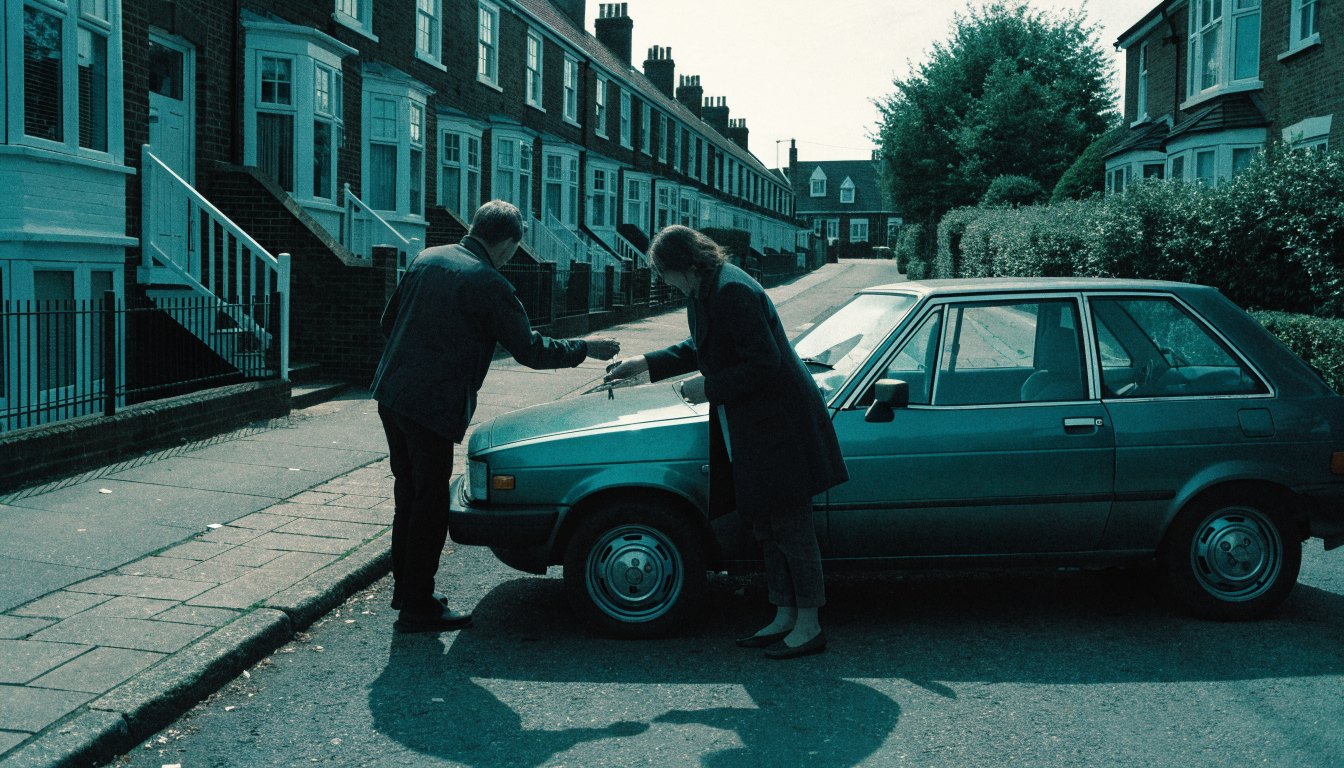
- Check ID before the test drive. Driving licence, name and address, photographed. Confirm they’re insured to drive it.
- Agree the final price in writing. A text message is fine. It stops the doorstep renegotiation.
- Take the payment and wait. Check your account. Then check it again.
- Only then hand over. Sign the V5C, give the buyer the new keeper slip, and hand over both keys, the locking wheel nut key and the service records.
- Tell DVLA online the same day. You’ll get email confirmation. Cancel your insurance and any tax direct debit afterwards, once that confirmation is in your inbox.
- Write a two-line receipt. Date, price, mileage, number plate, both names, both signatures. One copy each, and photograph the signed V5C section before it goes.
Have the paperwork ready before they arrive
Most doorstep haggling starts with a question you can’t answer on the spot: when was the cambelt done, is that the full service history, why is there a gap in 2021. A buyer who isn’t certain the car is what you’ve described will push on price, and that conversation lands on you at exactly the moment you’re trying to concentrate on the money. Have the answers ready and the whole thing gets shorter and calmer.
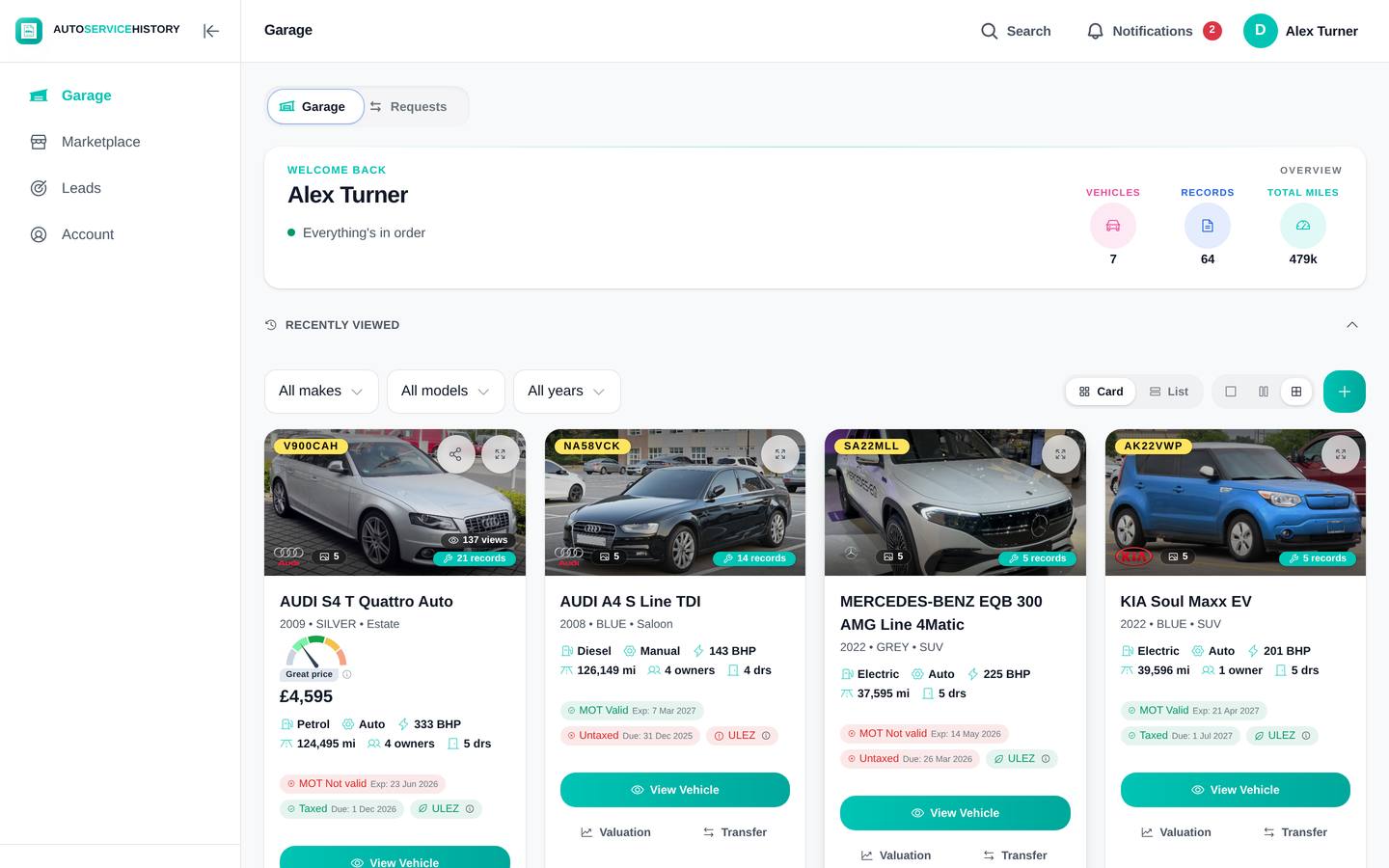
That’s the job AutoServiceHistory does. DVLA and MOT data comes in automatically, you photograph your receipts, the AI reads them into a dated timeline, and you get a verified report you can share as a link or a QR code — the buyer opens it with no app and no account, at 10pm, without you. There’s a free A4 “For Sale” sheet with that QR on it for the windscreen, and if your history has holes, we can request the manufacturer’s records and they come back within hours. The free plan has no time limit and no card. Set your car up before the first viewing and the handover becomes just the money.
The honest short version
- Bank transfer, confirmed in your own account — not a screenshot, not an email.
- Wait for the full amount. Paid in instalments means the car stays where it is.
- Cheques, banker’s drafts, “friends and family” payments and overpayment refunds are where private sellers get caught.
- Order matters: ID, price agreed in writing, payment, then keys and V5C.
- Tell DVLA online the same day, then cancel the insurance and the tax direct debit.
- Have the history ready before the viewing — it shortens the haggling.
FAQ
Is a bank transfer safe when selling a car privately? Yes, as long as you treat the car as unsold until the money shows in your own account. Check your banking app yourself; screenshots and confirmation emails are easily faked. Faster Payments is usually quick, but fraud checks and daily limits can delay it, so ask the buyer to warn their bank first.
Can a payment be reversed after I’ve handed over the car? Some can. Cheques and banker’s drafts can appear to clear and then bounce weeks later, and certain app payment types can be pulled back. A completed bank transfer into your account is far harder to unwind, which is why it’s the sensible default for a private sale.
When should I hand over the V5C? After the full payment has landed in your account — never before, and never “while the transfer goes through”. Sign the V5C with the buyer, give them the new keeper slip, hand over both keys, the locking wheel nut key and the service records, then tell DVLA online the same day.
Should I take a deposit? From someone who has actually viewed the car, yes — by bank transfer, with the amount and terms confirmed in a text message. A deposit from a buyer who won’t view the car and wants to send a courier is a well-known scam, not a sale.
Do I need a receipt for a private car sale? Two lines will do: date, price, mileage, number plate, both names, both signatures, one copy each. It’s your evidence of what was sold, to whom, and on what date — useful if anything is disputed later.