Used car viewing checklist: what to check before you buy
A proper viewing has four parts, in this order: check the paperwork before you travel, hear the engine start from cold, walk round the body and tyres in daylight, then go through the interior, the boot and under the bonnet. Give it 45 minutes and don’t let anyone hurry you. Most of the expensive faults are either visible, audible, or sitting in the car’s history — and the history is the part people skip.
Here’s the checklist in the order you’ll actually use it.
Before you go: the checks you can do from your sofa
Half of a good viewing happens before you get in your own car.
- Pull the free MOT history on GOV.UK using the number plate. You get every test result, every advisory and a mileage reading each year. The mileage should climb steadily; a drop or a flat spell needs explaining.
- Run a provenance check for outstanding finance, write-off markers and stolen records. It won’t tell you how the car was looked after, but it tells you whether it’s safe to buy at all.
- Ask for the VIN and check it against the advert and the V5C logbook. A seller who won’t give it has told you something.
- Ask what service history comes with it — the book, a folder of receipts, or a verified digital record you can open on your phone before you set off. Ask specifically whether the cambelt has been done, with a date and a mileage.
- Ask why they’re selling and how long they’ve owned it. Vague answers are an answer.
Start it from cold — you only get one chance
Say when you book that you want to see the car started from cold, and arrive on time. A seller who warms the engine up “to have it ready” may be hiding a rattle, a smoky start or a slow crank.
With the key turned, watch and listen:
- Warning lights should all illuminate, then go out. One that never comes on has usually been removed from the cluster.
- Smoke from the exhaust on start-up: blue means oil, white that hangs around means coolant. Both are expensive.
- Noise — a rattle for the first few seconds, a diesel knock that doesn’t settle, or a whine that rises with the revs.
If you turn up and the bonnet is warm, arrange another visit. It costs you a morning; the alternative can cost you an engine.
The walk-round: panel gaps, paint and tyres
Do this in daylight, ideally when the car is dry — rain and dusk hide a multitude of sins.

- Panel gaps should be even down both sides. Mismatched gaps or a door that sits proud suggests accident repair.
- Paint — check the colour match in sunlight, especially between wings, bumpers and doors. Overspray on rubber seals is a giveaway.
- Rust and ripples along sills, wheel arches and the boot floor lip.
- Tyres — 1.6mm is the legal minimum tread, but look at how they’ve worn. Uneven wear across a tyre points to alignment or suspension, not just age. Matching brands across an axle is a decent sign of an owner who didn’t cut corners.
Inside, in the boot and under the bonnet
Sit in it properly before you drive it.
- Smell for damp and press the carpets and the boot floor. Wet means a leak, and leaks mean electrical faults later.
- Work every switch — windows, mirrors, heater on full, air-con blowing genuinely cold, the infotainment, the boot release.
- Check the boot for the spare or repair kit, the jack and the locking wheel nut key. Replacing that key alone is a needless £60.
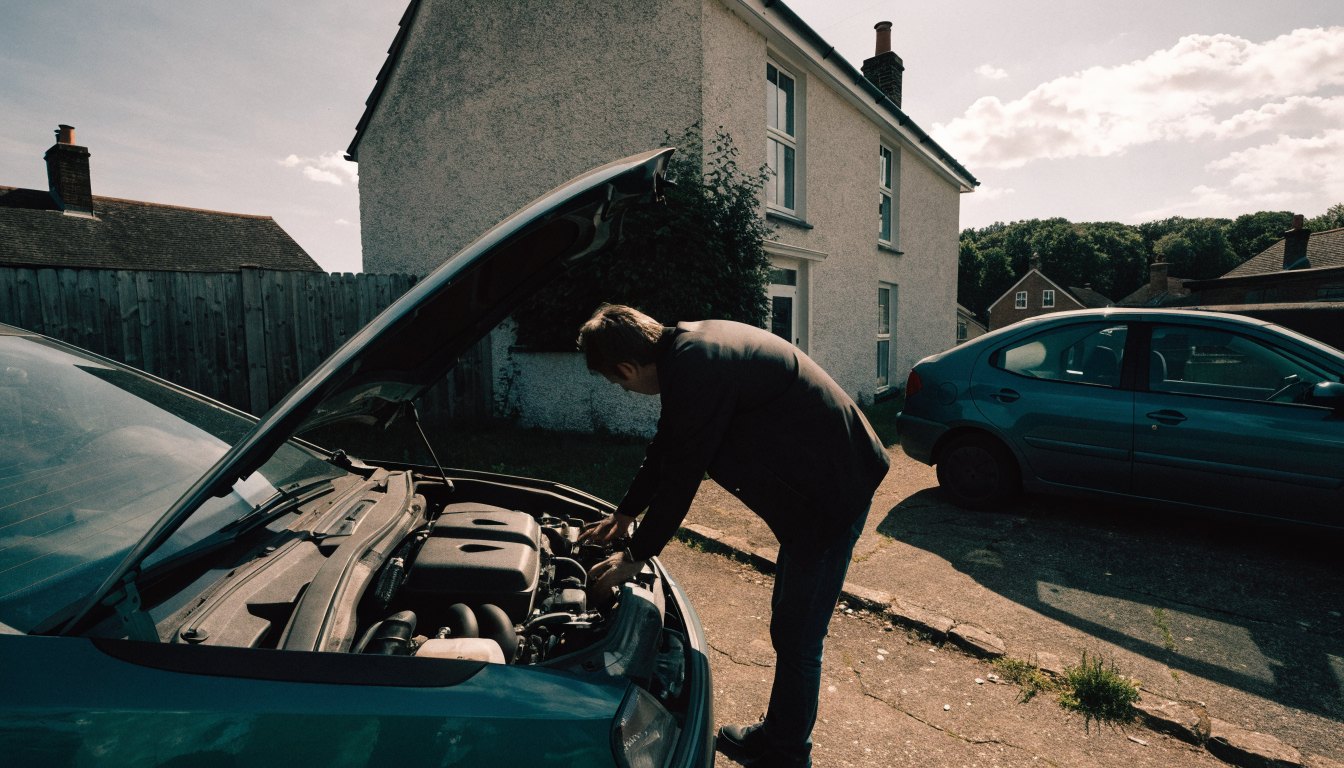
- Under the bonnet, look at the oil level and colour, the coolant level, and under the oil filler cap for mayonnaise-like sludge. Then look for fresh leaks and shiny, recently-turned bolts.
Cross-check what you find against what the service record actually says was done.
Ask the car the awkward questions
Everything above tests the car in front of you. The history tests the years before that, and it’s the part a seller can most easily gloss over.
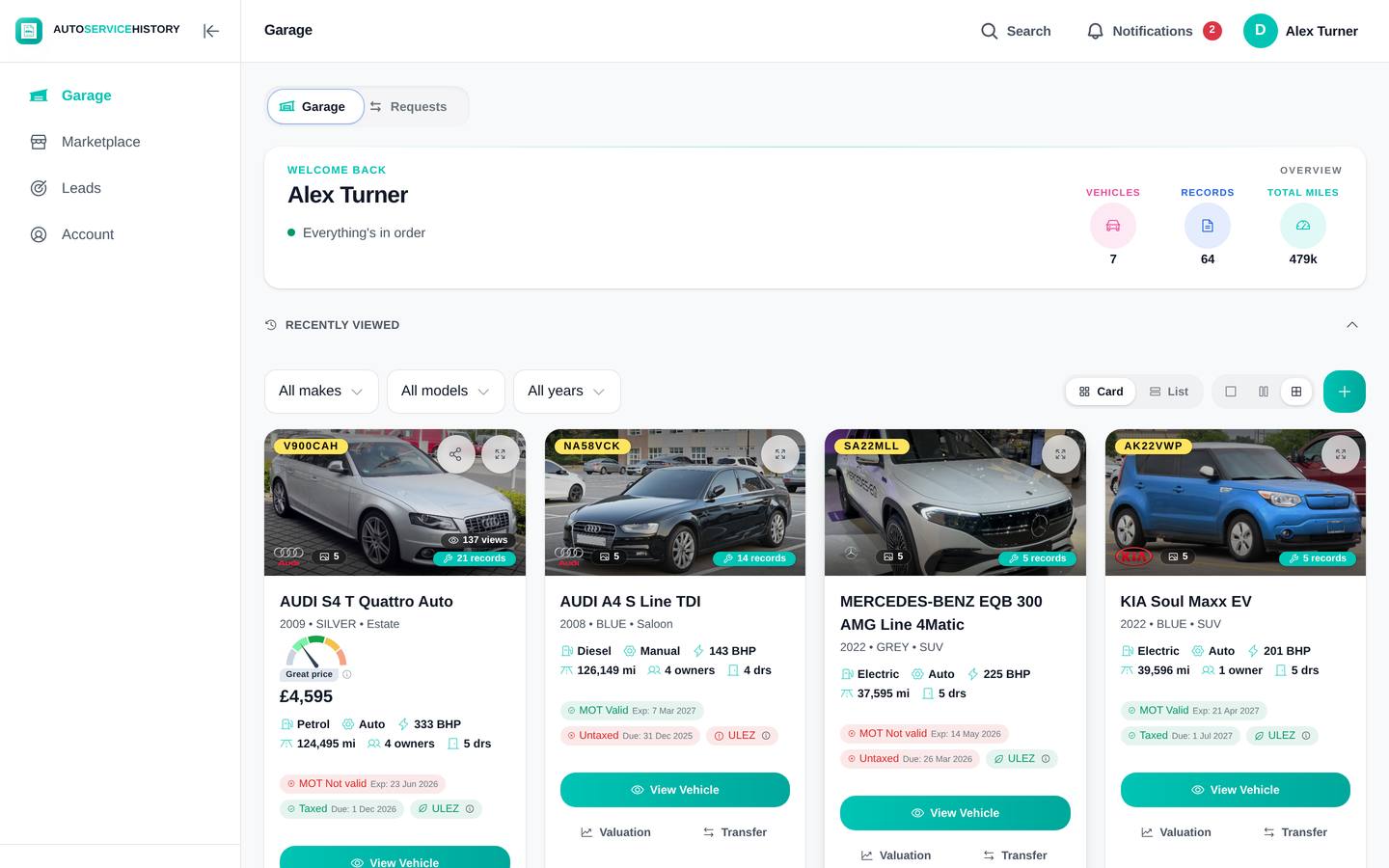
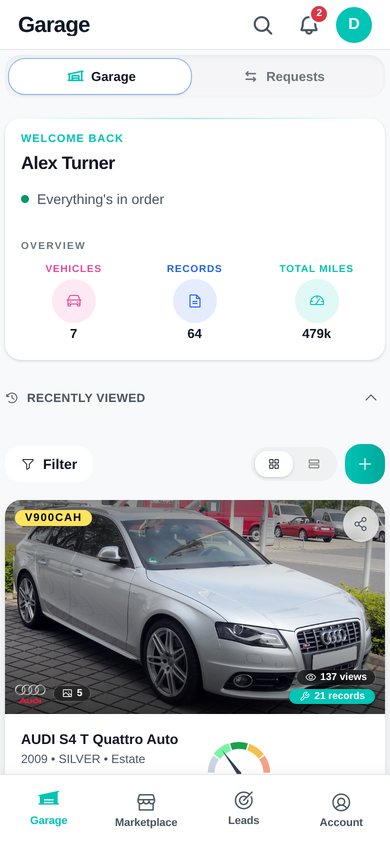
If the car has a record on AutoServiceHistory, ask for the share link before you travel. It opens on your phone — no app, no account — with the receipts, DVLA and MOT data and the service timeline in one place. Every report has an AI you can question directly: when was the cambelt changed?, what did the last MOT advise? It answers from that car’s record rather than from a sales pitch.
Two things worth knowing. Each car has one record tied to its VIN, so a padded or cloned history is harder to pass off. And where a history has gaps, the owner can request the manufacturer’s records — those come back within hours.
Buying rather than selling? Start a free account and you can keep the record running on whatever you end up buying. It’s free to start.
The honest short version
- Do the desk work first — MOT history, provenance check, VIN against the V5C, and ask about the cambelt before you drive anywhere.
- Insist on a cold start. Warm bonnet, come back another day.
- Walk round in daylight — panel gaps, colour match, and how the tyres have worn.
- Damp carpets, every switch, the boot kit, under the bonnet. Cheap to check, expensive to miss.
- Verify the history, don’t trust it. Dates, mileages and receipts beat “I’m sure it was done”.
FAQ
How long should a used car viewing take? Allow about 45 minutes for the car itself, plus a test drive. Anything faster and you’ll miss the cold start, the tyre wear or the damp boot floor. A seller who rushes you is doing it for a reason.
Does the engine really need to be cold? Yes. A warmed-up engine hides a smoky start, a slow crank and the rattle that settles after ten seconds. Ask when you book, arrive on time, and rearrange if the bonnet is warm.
What should I ask the seller? Why they’re selling, how long they’ve owned it, whether the cambelt has been done with a date and mileage, what service history comes with the car, and whether there’s any outstanding finance.
What if the car has no service history? Treat it as a price and a risk question, not a deal-breaker. Budget for the big-ticket items you can’t prove — cambelt, clutch, major work — and check the MOT record carefully for a mileage trail that makes sense.
Can I check anything before I travel? Plenty. The MOT history is free on GOV.UK from the number plate, a provenance check covers finance and write-off markers, and a seller with a digital record can send you a link to read before you set off.