Warranty claim rejected because of no service history?

Yes, a warranty provider can refuse a claim if you can’t show the car was serviced on schedule. Nearly every policy — manufacturer-backed or third-party — makes servicing to the maker’s intervals a condition of cover, and the burden of proof sits with you. But a rejection isn’t always final: a missing stamp is not the same as a missing service, and a fault unrelated to the work you skipped is arguable.
Here’s what warranty companies actually check, and what to do if you’ve already had a no.
Why service history sinks a claim
Cover is conditional, and the conditions are in the small print. The usual reasons a claim gets knocked back:
- Service missed or done late — outside the schedule by time or mileage, whichever came first.
- No dated proof — the work was done, but the receipts are long gone and the book was never stamped.
- Wrong oil or parts — the grade or specification doesn’t match what the manufacturer requires.
- The fault traces back to the gap — a seized engine after a skipped oil change is a straight line an assessor will happily draw.
Assessors work backwards from the failure. If the servicing record is thin at exactly the point that matters, expect questions.
You don’t have to use a main dealer
This one costs owners money because they assume the opposite. Under UK competition rules, a manufacturer warranty stays valid if the car is serviced by any suitably qualified garage, to the manufacturer’s schedule, using parts and fluids of matching quality. Your local independent is fine.

Two conditions, though. The work must genuinely follow the maker’s schedule — not a generic “full service”. And you must keep the itemised invoice. Third-party warranty policies can set stricter terms than that, so read yours before booking anything.
What actually counts as proof
A stamp in the book is weak evidence on its own — undated, unitemised, and easy to dispute. What holds up is an invoice showing:
- The date and the mileage at the time of the work.
- The garage’s name, address and VAT number.
- The car — registration or VIN, not just “the blue Golf”.
- Itemised work, not a one-line total.
- Oil specification and part numbers where they matter.
Photograph each one the day you get it. Paper fades, ink on thermal receipts vanishes inside a year, and a shoebox in the loft is one house move from being landfill. Keeping a dated record of every service as you go is far easier than reconstructing one under pressure.
If your claim has already been rejected
Work through it in order:

- Get the refusal in writing, quoting the exact clause they’re relying on.
- Rebuild the record. Ring every garage that has touched the car — most keep job records for years and will reprint an invoice. You can also request the manufacturer’s own records; those come back within hours and often fill gaps you’d written off.
- Test the link. If the failed component has no plausible connection to the service you missed, say so plainly and ask them to justify the causal link.
- Escalate. Complain formally first. If the warranty is an insurance-backed product, the Financial Ombudsman Service can review it free of charge.
Keeping the proof where you can find it
The scramble — ringing round garages, hunting for receipts, hoping a stamp exists — is easier to avoid than to fix.
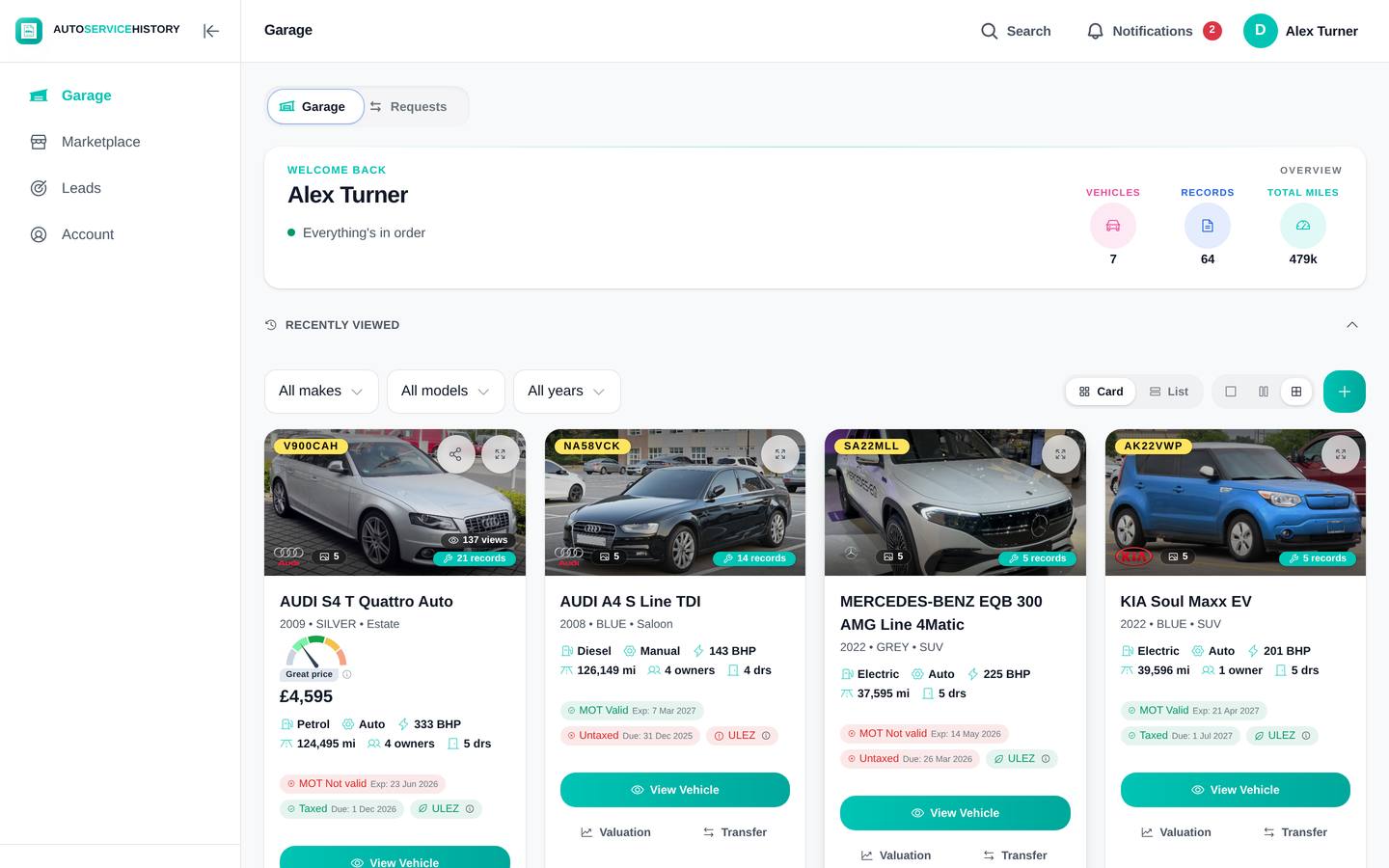
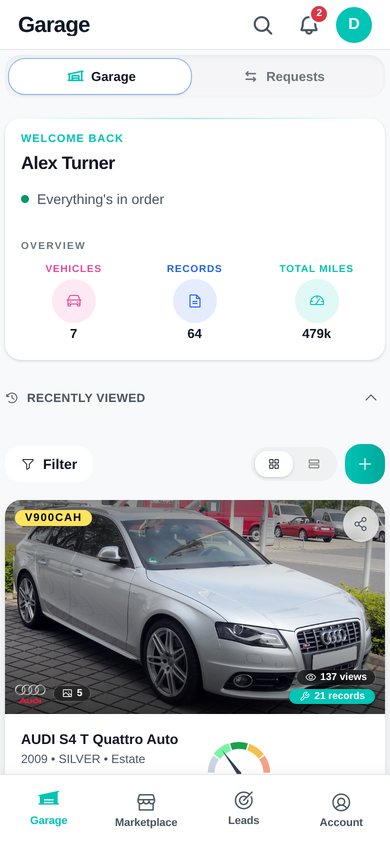
That is what we built AutoServiceHistory for. Photograph an invoice and the AI reads your receipts, pulling out the work, the cost and the mileage, then filing it by year against your car’s VIN. MOT and DVLA data come in automatically, so the servicing sits beside the official record. For gaps from before you owned the car, you can request the manufacturer’s records; those come back within hours.
After that, answering a warranty assessor is a link rather than a folder — the report opens in a browser with no app and no account. The same record shows a buyer the car’s been looked after when you come to sell it.
Keeping one costs nothing: no time limit and no card. Start your car’s record and photograph what’s already in the shoebox while it’s still legible.
The honest short version
- Yes, a provider can refuse a claim over servicing — the burden of proof sits with you.
- A main dealer isn’t required: any qualified garage, the maker’s schedule, matching-quality parts, itemised invoice.
- A dated, itemised invoice is proof. A stamp on its own is not.
- Already rejected? Get it in writing, rebuild the record, challenge the causal link, then escalate.
- Photograph receipts as they arrive. Rebuilding a history under pressure is the hard way round.
FAQ
Can a warranty claim be refused for having no service history? Yes. Servicing to the manufacturer’s schedule is a condition of nearly every UK policy, and the burden of proof sits with the owner. A refusal can still be argued if the failed component has no plausible link to the service that was missed.
Does using an independent garage void a manufacturer warranty? No. UK competition rules keep the warranty valid provided a suitably qualified garage follows the maker’s schedule and uses parts and fluids of matching quality. Keep the itemised invoice. Third-party warranty policies can set stricter terms, so read yours first.
What counts as proof that a car was serviced on time? A dated, itemised invoice naming the garage, the car’s registration or VIN, the mileage at the time and the work carried out — including oil specification where it matters. A book stamp alone is undated and unitemised, so it’s easy to dispute.
Can I recover service records I’ve lost? Often, yes. Garages usually keep job records for years and will reprint an invoice on request. You can also ask for the manufacturer’s own records covering work done at franchised dealers, which come back within hours.
Who reviews a warranty claim I think was rejected unfairly? Start with the provider’s formal complaints process, asking for the refusal in writing with the exact clause quoted. If the warranty is an insurance-backed product, the Financial Ombudsman Service can then review the case free of charge.