What paperwork do I need to sell my car?
To sell a car privately in the UK you legally need two things: the V5C logbook in your name, and a valid MOT certificate if the car is over three years old. Everything else — service history, receipts, old MOT certificates — is optional in law, but it is what separates a clean sale at your asking price from an afternoon of haggling. Buyers pay for proof, not promises.
Here’s the full list, what to do about the bits you’ve lost, and how to have it all ready before the first person turns up on your driveway.
The two documents you actually need
The V5C (logbook). It must be in your name, at your current address. Check the details match the car — number plate, VIN, colour, engine size. If anything is wrong, sort it with DVLA before you advertise. A buyer who spots a mismatch will walk, and quite right too.
A valid MOT. Any car over three years old needs one to be driven away legally. If yours runs out next month, get it tested now — the test is capped at £54.85 and a fresh certificate is worth far more than that on the asking price.
One warning: the green “new keeper” slip is not a logbook. If that’s all you have, you don’t yet have the paperwork to sell.
The paperwork that gets you paid
None of this is legally required. All of it moves the price:
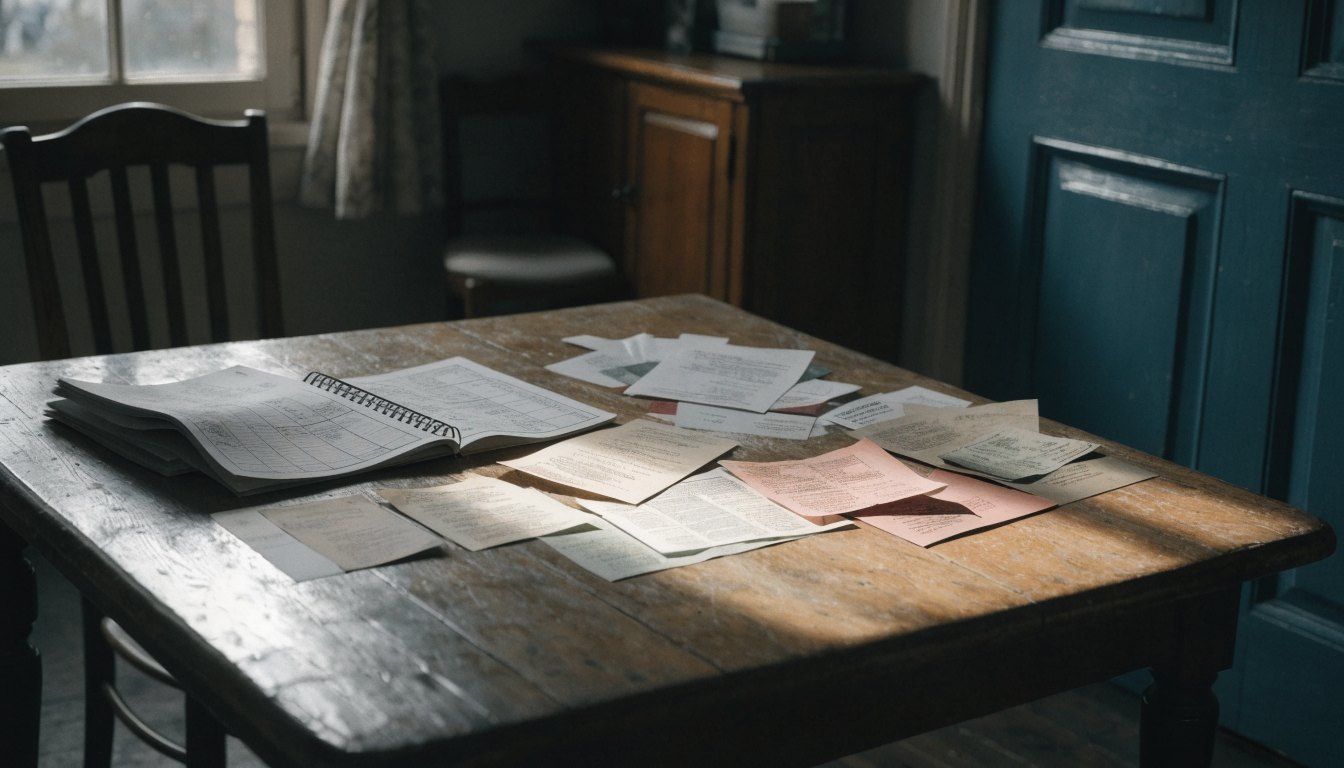
- Service history — the stamped book, the invoices, or both. This is the big one.
- Receipts for the expensive jobs — cambelt, clutch, tyres, battery, any major repair. Date and mileage on each.
- Old MOT certificates and advisories — they show a mileage trail that backs up everything else.
- The handbook, both keys and the locking wheel nut key — small things, but missing ones make a buyer wonder what else is missing.
- A finance settlement letter, if there’s outstanding finance. Settle it before you advertise, not during the handshake.
If someone asks “is the cambelt done?” and you hand them a dated invoice, that conversation is over in ten seconds.
What to do when something’s missing
Most sellers have gaps. Most gaps are fixable:
- No V5C? Apply for a replacement using a V62. It costs £25 and takes a few weeks, so start today rather than the night before a viewing.
- Lost MOT certificates? You don’t need the paper. The full MOT history is free on GOV.UK with just the number plate.
- Missing invoices? Ring the garages that did the work. Most keep records for years and will happily reprint.
- Serviced at a main dealer? We can request the manufacturer’s records on your behalf, and they typically come back within hours — enough to turn “partial history” into something much closer to full. Here’s how record recovery works.
Get it all in one place before the first viewing
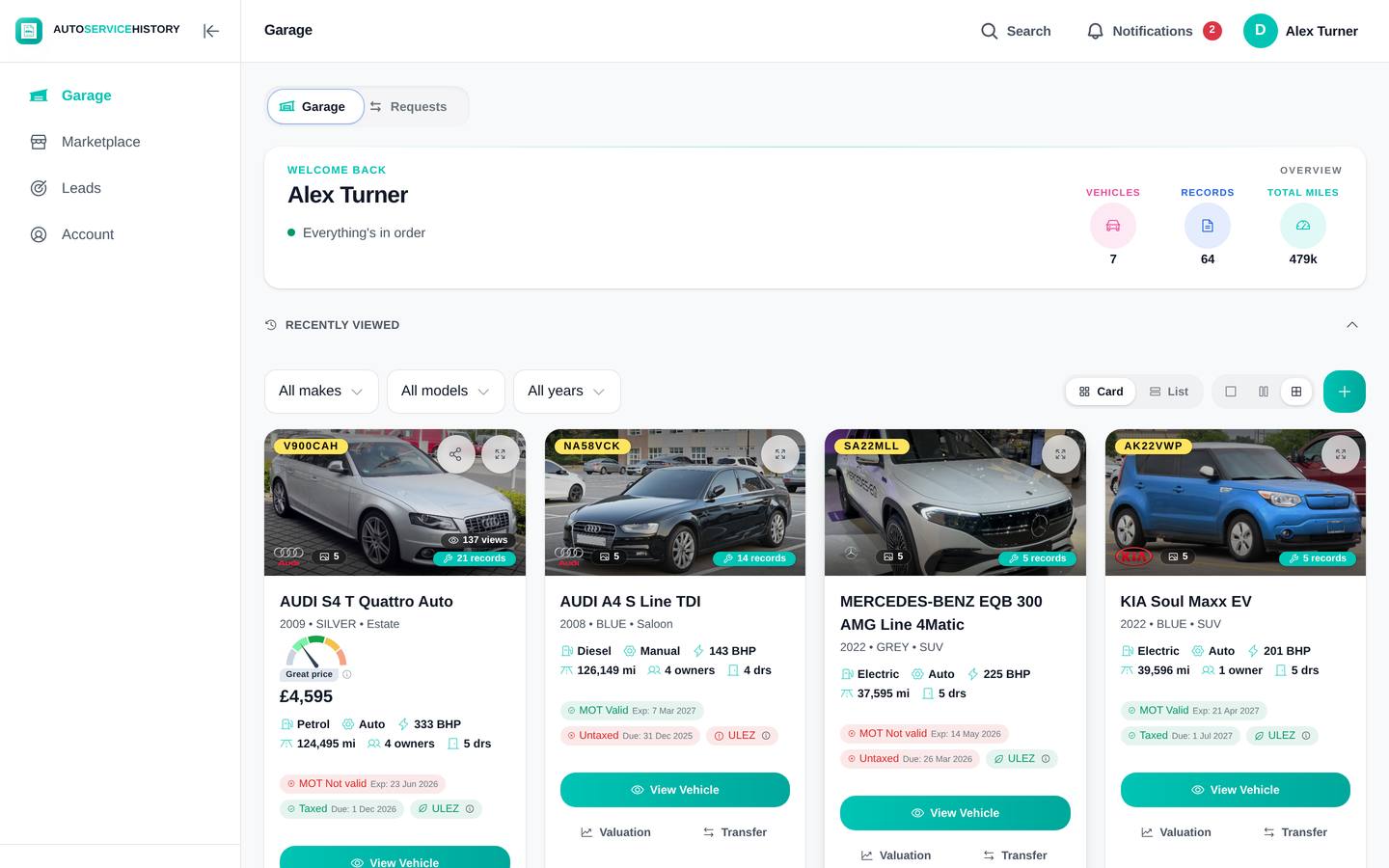
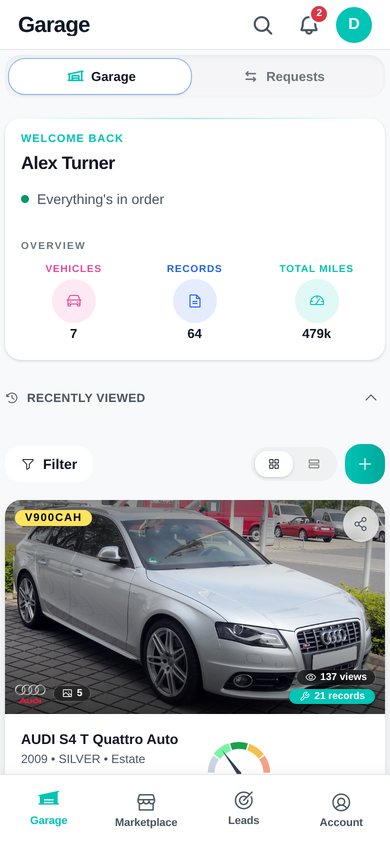
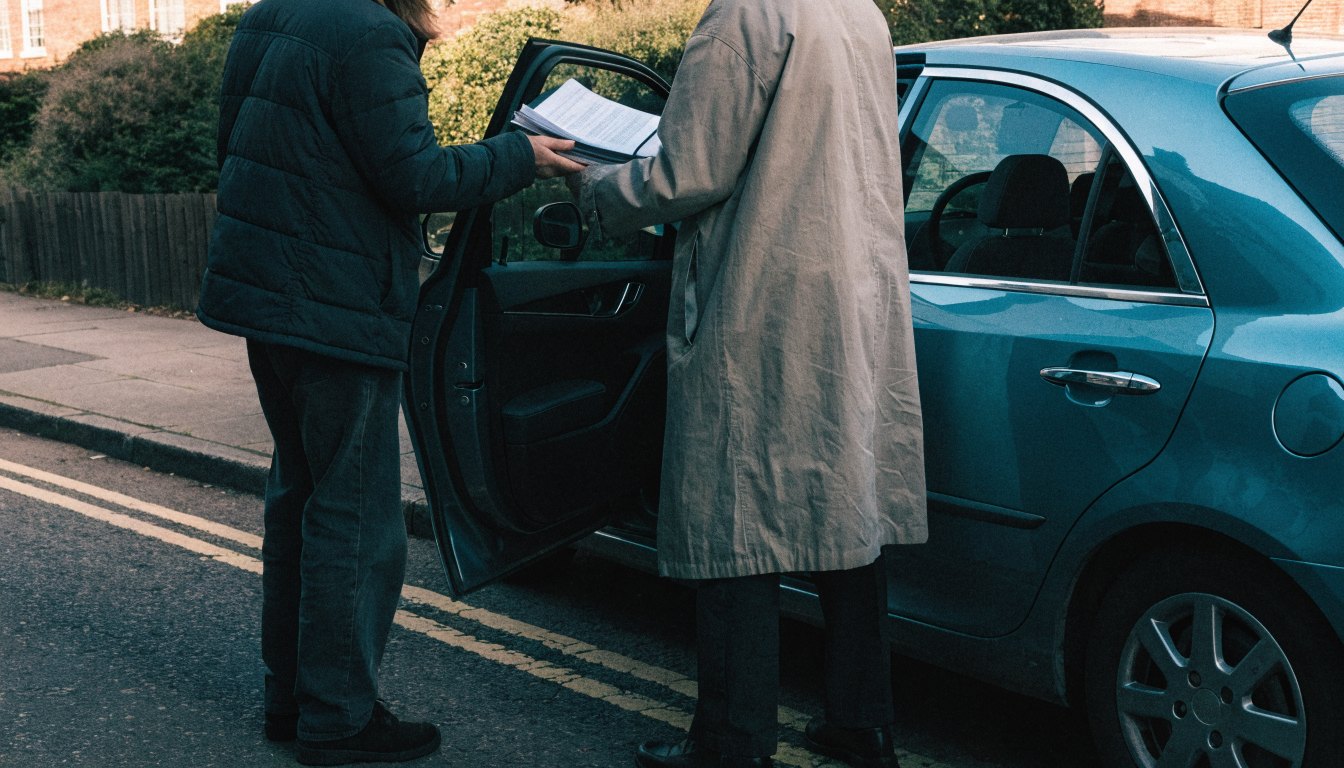
A shoebox of receipts is proof, but it’s awkward proof — the buyer ends up leafing through it on your driveway in the rain. The tidier version: photograph the lot and let the AI read your receipts, sorting every job, cost and mileage by year. Your DVLA and MOT data is pulled in automatically, so there’s nothing to type.
What you get back is one link to send with the advert. The buyer opens it on their phone — no app, no account — and sees the whole record. There’s also a free A4 “For Sale” sheet with a QR code for the window. Most of what a private seller needs costs nothing: digitise your paperwork before the first viewing, or read more about selling privately.
When the enquiries start coming in
The paperwork gets you to the viewing. The next drain on your evening is the questions — the same three, over and over: is the cambelt done, how many owners, why are you selling. Every shared report has an AI agent sitting on it that answers those from the car’s actual record, at any hour, and takes a number if someone wants to book a viewing. You wake up to genuine enquiries rather than a inbox of tyre-kickers and time-wasters.
It also keeps your details out of the advert. The AI spots personal data on what you upload — your address on an invoice, your name on a photo of the V5C — and blurs it on the shared copy. The original stays encrypted; the buyer sees the work that was done, not your postcode.
There’s a free plan for private sellers covering the record, the share link and the A4 sheet — what you get and what it costs, how it works for owners, or just start with the receipts you already have and add the rest as it turns up.
The honest short version
- Legally you need two things: the V5C in your name, and a valid MOT if the car is over three years old.
- Everything else is optional — and everything else is what gets you your asking price.
- Fix the gaps early: a V62 for a lost logbook, GOV.UK for missing MOT certificates, a phone call for missing invoices.
- Serviced in the franchised network? Ask us to request the manufacturer’s records — they typically come back within hours.
- Get it into one link before the first viewing, so the proof is on the buyer’s phone instead of in a shoebox on the kitchen table.
FAQ
Do I need a service book to sell my car? No. There’s no legal requirement to hand over a service book. But a car with proof of servicing sells faster and for more, and invoices, garage records or a digital record count just as well as stamps in a book.
Is a “sold as seen” receipt legally binding? It won’t cover you for lying. A private seller must describe the car accurately, and “sold as seen” doesn’t protect you from a misrepresentation claim. Write two copies with the date, price, number plate, VIN, mileage and both names and addresses, and both sign.
Can I sell a car without the V5C? Not sensibly. Apply for a replacement with a V62 (£25, a few weeks) before you advertise. The green new keeper slip is not a logbook, and a buyer left without a V5C faces a fight to tax and register the car.
What do I do with the logbook after the sale? Tell DVLA you’ve sold it on the day of the sale — online is quickest. Give the buyer the green new keeper slip (V5C/2), keep a record of the date, and any remaining tax is refunded to you automatically.
Can I get service history back from a main dealer? Often, yes. Ring the garage first, as most keep records for years. If the car was serviced in the franchised network, we can request the manufacturer’s records on your behalf and they usually come back within hours.